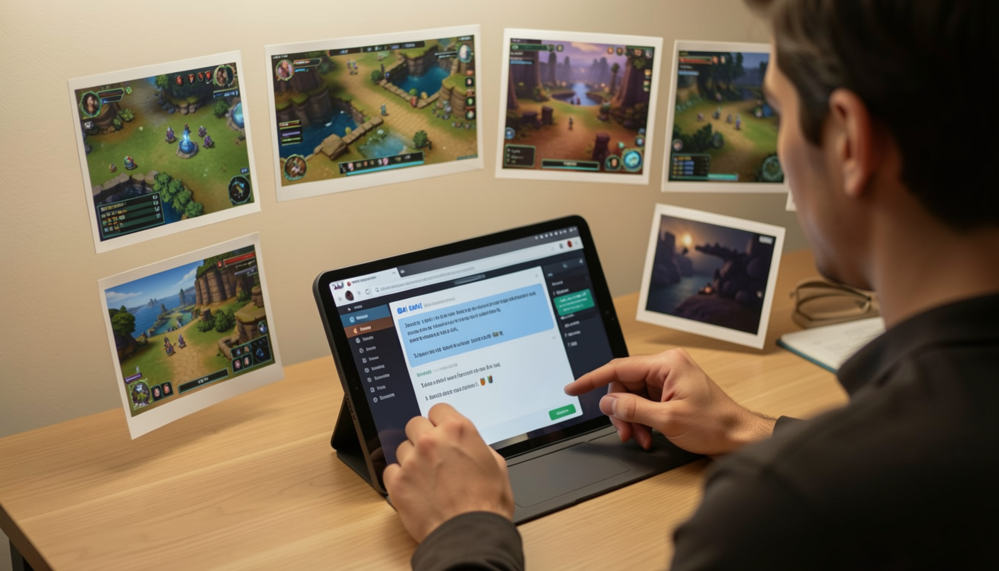
Manual vs AI-Assisted Game Localization: Accuracy, Speed, and Risk
Manual game localization and AI-assisted game localization are two specific localization techniques used for the localization of video games. Manual game localization relies on linguistic and cultural experts, while AI-assisted localization combines machine translation with linguistic and cultural expertise. Understanding the accuracy, speed, and risk tradeoffs between these methods helps studios choose the right localization strategy for each project.
What Is Manual and AI-Assisted Game Localization?
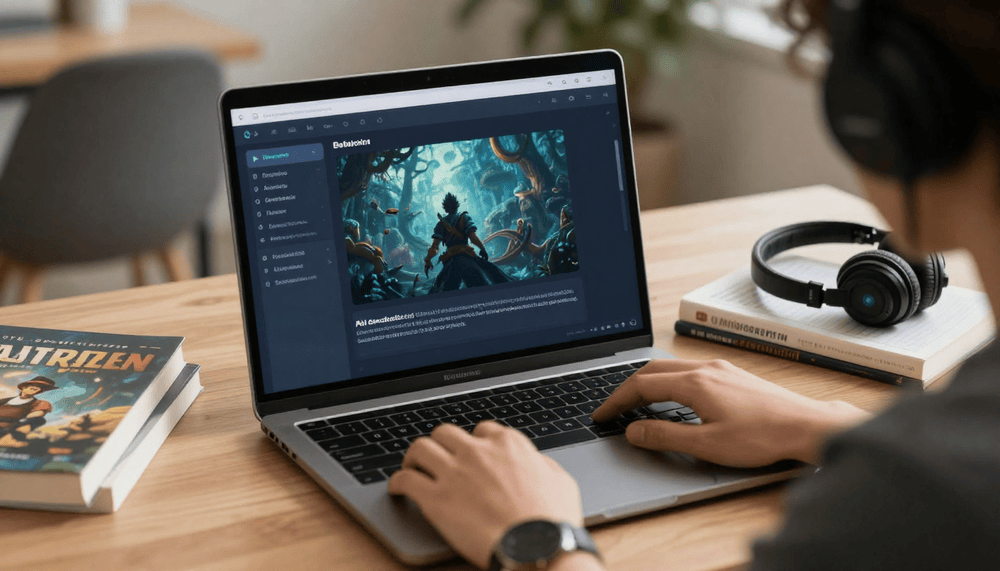
Manual game localization is a completely human-centric initiative that involves a series of actions, such as translating and testing game text, UI elements, and dialogue that are meant for a particular market segment.
It is a widely adopted phenomenon for games that have a lot of storylines involved with high-end gameplay. Meanwhile, AI-assisted game localization uses machine translation and language models to generate initial translations that are then reviewed, edited, or approved by human linguists.
The goal is to accelerate turnaround time while maintaining acceptable quality. AI-assisted localization is increasingly used for live service games, frequent content updates, and large-scale text volumes where speed and cost efficiency matter.
Both manual and AI-assisted game localization aim to deliver a playable and culturally appropriate experience, but they differ significantly in how accuracy, speed, and risk are managed throughout the localization lifecycle.
Also read: Lost in Translation? How Voice-Over Enhances Your Game Localization Strategy
Benefits of Each Localization Approach
Understanding when to apply manual or AI-assisted game localization depends on content complexity, release timelines, and risk tolerance. Each approach offers distinct advantages that align with different stages of game development and business goals.
Manual Game Localization Benefits
Manual game localization delivers the highest level of linguistic precision and cultural authenticity, making it the preferred choice for content where player immersion and emotional impact are critical. Below are the benefits of manual localization:
- High linguistic accuracy for complex narratives and emotional dialogue
- Strong cultural adaptation for humor, idioms, and sensitive content
- Better consistency of character voice and tone across long scripts
- Lower risk for brand damage in premium or story-heavy games
- Preferred for RPGs, story-driven adventure games, and AAA titles
Manual game localization is especially effective when creative intent and player immersion are top priorities. Human translators can interpret subtext, irony, and emotional pacing that automated systems often miss.
AI-Assisted Game Localization Benefits
According to Smartling, over 70% of localization teams report using machine translation or AI-assisted tools in their workflows. AI-assisted game localization focuses on efficiency and scalability, making it suitable for fast-moving production environments and content with lower creative risk. The benefits include:
- Faster turnaround for large content volumes
- Cost efficiency for frequent updates and live operations
- Scalable solution for multilingual releases
- Useful for UI text, patch notes, tutorials, and repetitive strings
- Supports rapid market entry for early testing or soft launches
AI-assisted game localization is often chosen for mobile games, live service titles, and early access builds where content changes frequently and speed outweighs absolute linguistic perfection.
Both manual and AI-assisted game localization follow structured workflows designed to ensure linguistic accuracy, usability, and cultural relevance. However, the depth of human involvement and reliance on automation differ significantly between the two approaches.
Manual Game Localization Process
Manual game localization emphasizes human expertise at every stage of production, making it suitable for content where nuance, tone, and narrative coherence are critical.
-
Market and player analysis
-
Localization begins by understanding target player demographics, cultural preferences, language conventions, and genre expectations. This step helps linguists anticipate how players interpret tone, humor, difficulty levels, and monetization messaging within their local context.
-
Text extraction and preparation
-
All player-facing text, including UI elements, dialogue, tutorials, system messages, and monetization content, is extracted from the game build. Text is categorized by function and context to ensure translators understand how each string is used in gameplay.
-
Human translation and adaptation
-
Professional linguists translate and adapt content based on narrative intent, gameplay mechanics, and cultural norms. Rather than translating word-for-word, they adjust phrasing to preserve emotional impact, clarity, and immersion for local players.
-
Editing and review
-
Senior editors review translated content to ensure consistency in terminology, character voice, and tone across all assets. This step reduces discrepancies that can occur in long scripts or multi-writer projects.
-
Integration and testing
-
Localized text is implemented into the game build and tested to verify layout integrity, readability, and usability. Issues such as text overflow, misaligned UI elements, or unclear prompts are identified and corrected.
-
Linguistic quality assurance
-
Native-speaking testers validate that the localized content supports gameplay clarity, player comprehension, and emotional engagement. This final review ensures that the localized experience feels natural rather than translated.
Manual game localization workflows prioritize quality control and creative fidelity, which is why they are commonly used for premium titles and narrative-heavy games.
AI-Assisted Game Localization Process
AI-assisted game localization combines automation with targeted human oversight to increase speed and scalability, particularly for frequently updated content.
-
Automated pre-translation
-
Machine translation engines generate initial translations across large volumes of text. This step significantly reduces turnaround time, especially for repetitive or structured content.
-
Context enrichment
-
Screenshots, game builds, reference materials, and approved glossaries are provided to guide human post-editors. Context enrichment helps reduce ambiguity and improves translation accuracy.
-
Human post-editing
-
Linguists review and refine machine-generated output, correcting grammatical errors, improving flow, and ensuring cultural appropriateness. This stage is critical for preventing unnatural phrasing and mistranslations.
-
Terminology and style checks
-
AI tools and human reviewers align localized content with established glossaries, tone guidelines, and brand language standards. This helps maintain consistency across updates and live content.
-
Functional and linguistic testing
-
Localized content is tested in-game to identify issues such as truncated text, incorrect variables, or misinterpreted instructions. Both functional and linguistic problems are addressed before release.
AI-assisted game localization workflows are designed to support fast iteration cycles while maintaining acceptable quality levels. When applied strategically, they allow studios to balance speed, cost, and risk depending on content type and release phase.
Through these workflows, manual game localization emphasizes human control at every step, while AI-assisted game localization optimizes speed by automating early stages.
Accuracy Comparison Between Manual and AI-Assisted Game Localization
Accuracy in manual game localization is driven by human comprehension of context, emotion, and cultural nuance. Linguists can adjust phrasing based on character personality, narrative pacing, and regional sensitivities. This reduces the risk of mistranslation and awkward dialogue.
AI-assisted game localization has improved significantly in grammatical accuracy, especially for widely spoken languages. However, it still struggles with sarcasm, wordplay, culturally bound references, and inconsistent terminology if not properly supervised. Accuracy largely depends on the quality of post-editing and contextual input.
Also read: Brand Localization Explained: Definition, Importance, and Top Benefits
Common Mistakes in Game Localization
Risks in Manual Game Localization
- Longer time to market if schedules are underestimated
- Higher upfront costs for large-scale projects
- Inconsistent quality if translators lack game-specific expertise
These risks are typically mitigated by experienced localization partners and well-defined workflows.
Risks in AI-Assisted Game Localization
- Loss of narrative tone or character voice
- Cultural inaccuracies that offend or confuse players
- Overreliance on raw machine output without sufficient human review
- Inconsistent terminology across updates
A common mistake is treating AI-assisted game localization as a fully automated solution. Without proper human oversight, the risk of player-facing errors increases.
When to Choose Manual or AI-Assisted Game Localization
Manual game localization is best suited for projects where storytelling, emotional depth, and cultural authenticity define the player experience. It is also recommended for flagship titles and markets with high revenue expectations.
AI-assisted game localization works well when speed, scale, and cost efficiency are critical. It is effective for live operations, early access builds, and supporting content that changes frequently.
Many studios adopt a hybrid strategy, using manual game localization for high-impact content and AI-assisted game localization for high-volume, low-risk text.
Also read: Game Localization Strategies for Reaching Non-English Speaking Markets
FAQ
What is the main difference between manual game localization and AI-assisted game localization?
Manual game localization is fully human-driven, while AI-Assisted game localization uses machine translation with human post-editing.
Is AI-assisted game localization accurate enough for story-driven games?
It can support production, but manual game localization is still preferred for narrative-heavy content.
Does AI-assisted game localization reduce costs?
It can lower costs for large volumes, but savings depend on post-editing effort and quality requirements.
Can both approaches be used in one project?
Yes. Many studios combine manual game localization and AI-assisted game localization in a hybrid workflow.
Which method is faster for live service games?
AI-assisted game localization is generally faster for frequent updates and patches.
Does localization quality affect player retention?
Yes. Studies from localization and UX research firms show that clear and culturally adapted language improves player engagement and retention.
Conclusion
Manual game localization and AI-assisted game localization each serve distinct roles in modern game production. Accuracy, speed, and risk must be evaluated based on game genre, content volume, and market expectations. A thoughtful localization strategy often blends both approaches to balance quality and efficiency.
For studios planning global releases, choosing the right localization partner and workflow can reduce risk while maintaining player trust. Combining manual game localization for narrative elements with AI-assisted game localization for UI and system text can reduce turnaround time without sacrificing player experience.
Ready to balance accuracy and speed with expert game localization services? Visit https://digital-trans.asia/ to learn more about our services. Contact us today to get started!