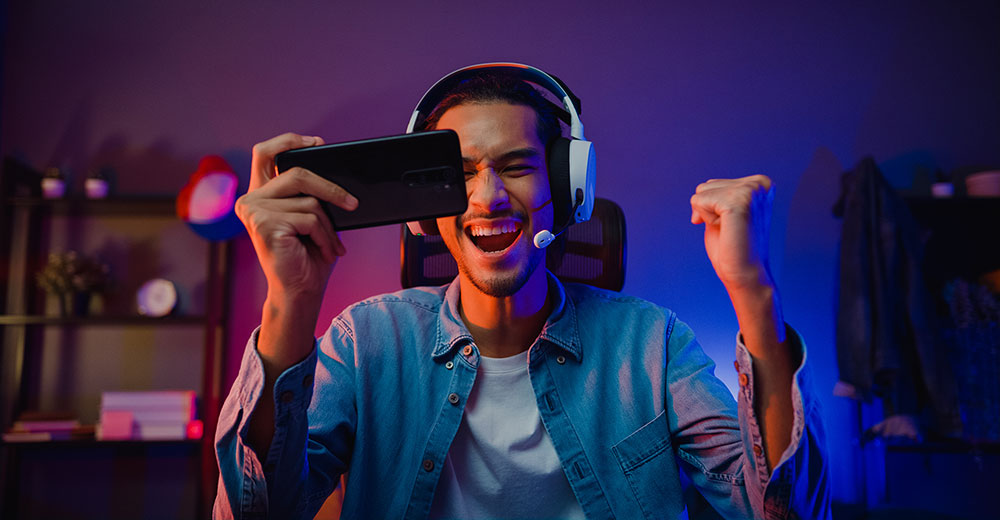
Why Some Games Succeed Without Dubbing, and Others Don’t?
Nowadays, game developers face a crucial decision when preparing their titles for international audiences: should they invest in dubbing, or rely on subtitles and original voice tracks? While some games thrive without localized voiceovers, others struggle to connect with players unless they fully embrace game dubbing and game audio localization.
This raises a crucial question: why does dubbing make or break success for some games, but not for others?
The answer lies in a mix of narrative design, audience expectations, genre, and production quality. This article will explore what game dubbing and audio localization really mean, when they matter most, how the process works, and the common pitfalls developers should avoid.
What Is Game Dubbing and Game Audio Localization?
Game dubbing refers to the process of replacing a game’s original spoken dialogue with voice recordings in the target language. It involves voice actors, directors, translators, and audio engineers working together to recreate performances that feel natural and emotionally engaging in the target language.
Meanwhile, game audio localization is a broader concept. It includes not only dubbing, but also the adaptation of all audio-related elements—dialogue, ambient sounds, cultural references in voice lines, and even timing or delivery style—to suit different regions and audiences.
Moreover, the key difference between game dubbing and game localization lies in whether it involves simple voice replacement or a comprehensive adaptation of the audio experience.
Not every game needs dubbing to succeed. For example, text-heavy indie titles or stylistically minimal games can rely on subtitles without losing impact. However, story-driven or cinematic games often depend heavily on voice acting to deliver emotional depth, so dubbing becomes essential.
The Benefits of Game Dubbing and Game Audio Localization
There are clear scenarios where investing in game dubbing and game audio localization significantly enhances player experience and commercial success as follows:
When dubbing adds real value:
- Story-driven games with emotional narratives
Players rely on tone, pacing, and vocal nuance to connect with characters.
- Cinematic or AAA experiences
High-production-value visuals demand equally immersive audio.
- Younger audiences or casual players
Not everyone wants to read subtitles while playing.
- Regions with strong localization expectations
Markets like Germany, France, Spain, and Japan often expect full dubbing.
- Accessibility considerations
Dubbing supports players with reading difficulties or visual impairments.
- Dialogue-heavy gameplay (RPGs, visual novels, interactive dramas)
Audio becomes a core mechanic, not merely an enhancement.
When games can succeed without dubbing:
- Indie or stylized games
Artistic direction may prioritize minimalism over realism.
- Fast-paced gameplay (e.g., action, shooters)
Players focus more on mechanics than dialogue.
- Strong original voice identity
Some players prefer authentic original performances with subtitles.
- Budget constraints with smart prioritization
Resources can be allocated to gameplay or design instead.
How Game Dubbing and Game Audio Localization Work?

Creating high-quality game dubbing and audio localization involves more than merely translation. It is a structured, multi-step process that blends linguistic precision with creative performance as follows:
1. Script Translation and Adaptation
The original script is translated into the target language, but not word-for-word. Localization specialists adapt dialogue to preserve meaning, tone, humor, and cultural context.
2. Cultural Localization
References, idioms, jokes, and emotional expressions are adjusted to resonate with local audiences. This ensures the dialogue feels natural rather than “translated.”
3. Casting Voice Talent
Voice actors are selected based on their ability to match the personality, tone, and emotional range of the original characters, not simply their vocal similarity.
4. Voice Direction and Recording
Actors perform under direction to ensure consistency in tone, pacing, and emotional delivery. This stage is crucial for maintaining narrative integrity.
5. Audio Engineering and Integration
Recorded lines are edited, synced, and integrated into the game. Lip-sync (if applicable), timing, and sound mixing are carefully adjusted.
6. Quality Assurance (QA)
Testers review the localized audio in context—checking for awkward phrasing, timing issues, or mismatched emotional delivery.
7. Iteration and Refinement
Feedback loops help refine performances and ensure the final product meets both technical and creative standards.
Common Mistakes of Game Dubbing and Game Audio Localization
Despite their best efforts, many creators fail to recognize the true complexity of game audio translation. As a result, a number of typical problems frequently come up throughout the procedure.
Treating dubbing as nothing more than literal translation is a common error. The emotional connection with players is eventually weakened when conversation is translated verbatim without appropriate alteration, making it seem stiff or artificial. Casting is another difficulty; even if an actor is really talented, immersion may be rapidly disrupted if their voice does not fit the character's demeanor.
Another essential yet sometimes overlooked component is cultural subtleties. Players may feel disoriented or puzzled if humor, irony, and emotional nuances are improperly localized since they do not always translate between languages. Additionally, performances that appear disjointed rather than coherent might be caused by uneven voice direction during many recording sessions.
Furthermore, the crucial factor is technical execution. Even well-delivered words might seem unpolished due to poor synchronization, such as uneven lip motions or incorrect timing.
Last but not least, money allocation needs to be done properly. While splurging on pointless dubbing may have a detrimental effect on total return on investment, underfunding dubbing efforts might result in poor quality.
When taken as a whole, these drawbacks emphasize how crucial it is to treat game audio localization as a technical and artistic discipline rather than just an add-on to the production process.
Is Dubbing Always Better Than Subtitles?
While dubbing can significantly enhance immersion by allowing players to fully engage with the game without reading text, it is not always the preferred option for every audience. Many players value the authenticity of original voice acting, especially when it comes to preserving the creator’s original artistic intent and emotional delivery. Subtitles also allow players to experience performances exactly as they were first designed, which can be particularly important in culturally rich or performance-driven titles.
Additionally, player preferences often vary by region, genre, and even platform. For example, audiences in some markets are more accustomed to fully dubbed content, while others are comfortable relying on subtitles. Accessibility, gameplay pace, and narrative complexity also influence this decision.
Ultimately, the choice between dubbing and subtitles should be guided by the expectations and habits of the target audience, as well as the overall design goals of the game.
How Expensive Is Game Dubbing?
The cost of game dubbing can vary significantly depending on several key factors, making it difficult to define a one-size-fits-all budget. Elements such as the number of target languages, the total word count of the script, the complexity of the dialogue, and the level of production quality all play a role in determining the final cost. For instance, large-scale AAA titles with extensive dialogue, celebrity voice actors, and high production standards can require substantial investment.
However, dubbing is not exclusively reserved for big-budget projects. Developers with smaller budgets can adopt more scalable approaches, such as prioritizing key markets, focusing on main story content instead of full coverage, or working with emerging voice talent. Advances in localization workflows and global talent access have also made it easier to balance quality and cost. In this sense, dubbing can be tailored to fit different project sizes, as long as expectations and resources are aligned strategically.
Can Poor Dubbing Hurt a Game's Reputation?
Poor dubbing can have a noticeable negative impact on how a game is received. Voice acting is a powerful storytelling tool, and when it feels unnatural, misaligned, or poorly executed, it can quickly break immersion. Players may find it difficult to connect with characters if the delivery sounds flat, overly exaggerated, or inconsistent with the context of the scene.
Awkward localization, such as unnatural phrasing, mistranslated lines, or culturally inappropriate dialogue, can further amplify the problem. In some cases, these issues become focal points in player reviews, overshadowing otherwise strong gameplay or visual design. With modern players sharing their experiences widely through social media, streaming platforms, and review sites, negative impressions of dubbing quality can spread quickly.
On the other hand, high-quality dubbing often goes unnoticed since it feels seamless—yet that very invisibility is a sign of success. It supports the narrative without drawing attention to itself. This contrast highlights how crucial well-executed game audio localization is: when done right, it elevates the experience, but when done poorly, it can undermine the entire game.
Accordingly, Digital-Trans Asia provides professional translation, interpretation, and localization services for businesses across Asia. Turn every line into a natural, emotionally resonant performance with expert language services to make your game truly speak to every player.
Effective game audio translation, including dubbing, has been shown to improve lifetime income by up to 2.8 times and player engagement by up to 60%. Since non-English-speaking markets account for about half of all game revenue worldwide, investing in excellent localization is now essential to success abroad.
Conclusion
A game’s success without dubbing depends on several factors, including audience expectations, design decisions, and how crucial audio is to the player experience.
Games that favor minimalist storytelling or put mechanics ahead of narrative can succeed without dubbing. In the meantime, for emotionally charged and dramatic games to truly connect with players throughout the world, they frequently require excellent game dubbing and game audio translation.
Ultimately, the question is not if dubbing is required, but rather whether it complements the main experience of the game.
Developers who are aware of this distinction may provide experiences that seem really global, optimize their budgets, and make more intelligent translation decisions without sacrificing their unique voice.
Ready to expand your game globally with expert game localization services? Visit https://digital-trans.asia/ to learn more about our services. Contact us today to get started!
Careers: https://digital-trans.asia/careers
Contact Us: https://digital-trans.asia/contact-us