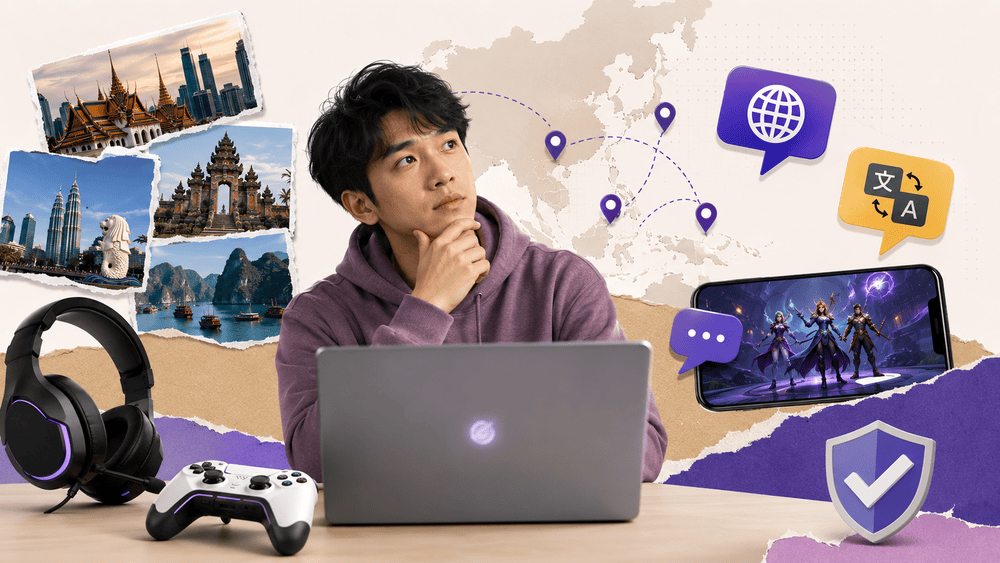
Why SEA Requires a Different Localization Strategy for Live Games
The global gaming industry has evolved far beyond simple translation. As live games—from live service titles and mobile games to MMOs and other continuously updated experiences—dominate the market, localization has become a dynamic, ongoing process rather than a one-time task. Nowhere is this more apparent than in Southeast Asia (SEA), a region known for its cultural diversity, rapidly growing player base, and unique digital ecosystems.
Many developers assume that localization strategies that succeed in Western or East Asian markets can simply be replicated in SEA. However, this assumption often leads to missed engagement opportunities, cultural missteps, and declining retention rates. SEA requires a distinct localization strategy tailored to its linguistic complexity, gaming behaviors, and community-driven dynamics. Why so? Kindly scroll down to discover more.
Get to Know about Localization in SEA
Localization refers to the process of adapting a game's content, interface, messaging, and player experience to suit a specific market or cultural context. While translation is one component, effective localization goes much deeper, including cultural nuance, gameplay communication, monetization messaging, live-event timing, and community engagement.
Meanwhile, live games introduce an additional layer of complexity. Unlike traditional single-release titles, it is continuously evolved through updates, seasonal events, new content drops, balance patches, and community-driven features. This means localization must also be continuous, scalable, and responsive.
Moreover, Southeast Asia presents unique challenges for localization due to several factors as follows:
- Linguistic diversity: SEA includes numerous languages and dialects, such as Bahasa Indonesia, Thai, Vietnamese, Tagalog, Malay, and regional variations within each language.
- Mixed language usage: Many players communicate in hybrid language forms (e.g., English combined with local slang), which influences how in-game text and marketing should be adapted.
- Mobile-first gaming culture: SEA has one of the highest mobile gaming penetration rates, which affects UI design, monetization language, and communication tone.
- Community-centric engagement: Social features, guild dynamics, and influencer ecosystems play a major role in player retention.
Since live games rely heavily on ongoing engagement, localization must support continuous player connection rather than simply ensuring comprehension.
Localization Strategy for SEA, Why Does That Matter?
A strong localization strategy for live games in SEA provides both immediate and long-term advantages. Here are some key benefits:
Improved player retention
Players are more likely to remain active when updates feel culturally relevant and easy to understand.
Stronger emotional engagement
Localization that reflects local humor, communication style, and cultural context helps players feel seen rather than treated as an afterthought market.
Higher monetization conversion
SEA players respond differently to promotional language, event structures, and pricing psychology. Localized messaging can significantly increase purchase rates.
More effective live events
Timing events around regional holidays, local festivals, or gaming trends creates stronger participation.
Reduced community friction
Proper localization prevents confusion in patch notes, event instructions, and gameplay mechanics.
Enhanced brand reputation
Players quickly recognize when developers invest in thoughtful localization, which builds trust and loyalty.
Better feedback loops
Localized communication channels enable more meaningful player feedback, improving future updates.
Localization Strategy in SEA: Process Explained
Developing an effective localization strategy for live games in SEA requires a structured, ongoing process rather than isolated translation tasks. Here are the steps:
1. Market and Player Behavior Analysis
Before localization begins, teams must understand regional player behavior. The execution refers to language preferences, gameplay habits, monetization expectations, and popular communication styles. For instance, Indonesian players may prefer casual conversational tone, while Thai communities might respond strongly to culturally specific references.
2. Establishing Localization Style Guides
Consistency is critical in live games. Creating detailed style guides ensures that terminology, tone, and cultural adaptation remain consistent across updates. After all, these guides should include some aspects as follows:
- Tone of voice
- Cultural sensitivities
- Preferred terminology for gameplay systems
- Guidelines for slang or informal language usage
3. Integrating Localization into Live Operations
Localization should be embedded directly into the live-ops pipeline. Rather than localizing after content is finished, teams should work alongside developers during production to avoid delays and maintain quality. As a result, this integration allows faster turnaround for:
- Patch notes
- Live event announcements
- Seasonal campaigns
- Emergency updates
4. Cultural Adaptation and Transcreation
Transcreation involves adapting content creatively rather than translating literally. This may include rewriting jokes, adjusting character dialogue tone, or adapting marketing copy to match local humor and expectations.
In SEA, transcreation is especially essential due to hybrid language usage and strong regional cultural identities.
5. Community Feedback and Continuous Optimization
Live games thrive on player interaction. Accordingly, localization teams should monitor community platforms, social media, and in-game feedback channels to identify issues quickly. Feedback loops enable rapid improvements in future updates.
6. Localization QA and Performance Monitoring
Testing localized content ensures accuracy, clarity, and technical functionality. To address this issue, the teams should track metrics, such as player retention after updates, engagement rates for localized events, and conversion rates for localized promotions.
Common Mistakes for Localization Strategy in SEA
One common mistake in this issue is treating SEA as a single unified market. While it is often grouped together geographically, each country has distinct cultural expectations and language usage patterns. Applying one localization strategy across all regions often results in generic messaging that fails to resonate.
Another risk is relying too heavily on literal translation. Direct translation without cultural adaptation may produce technically accurate text but fail to convey the intended tone or emotional impact. In live games, this can weaken community connection.
Moreover, many teams also underestimate the speed required for live games localization. Delayed updates or poorly translated patch notes can create confusion and frustration among players who rely on clear communication to understand new content.
Additionally, ignoring local community dynamics can lead to misalignment. SEA gaming communities are highly social and influenced by streamers, esports scenes, and online groups. Localization that does not consider these factors may struggle to gain traction.
Why Can't Developers Use the Same Localization Strategy Globally?
At first glance, a unified global localization strategy may seem efficient from both operational and budget perspectives. However, player expectations, communication styles, and cultural norms vary significantly across regions, making a standardized approach less effective, especially in Southeast Asia.
SEA is not a single homogeneous market as it consists of multiple countries with distinct languages, cultural references, humor styles, and digital behaviors. For instance, the tone that resonates with Indonesian players may differ greatly from what engages Vietnamese or Thai audiences. Even the perception of humor, formality levels in communication, and preferred gaming terminology can vary widely.
In live games, where ongoing engagement and community interaction are essential, localization must reflect these nuances. Players quickly notice when content feels generic or translated without cultural consideration, which can reduce immersion and emotional investment. As a result, a region-specific localization strategy ensures messaging feels native and relevant, increasing retention and player loyalty.
Additionally, SEA players often engage actively through community channels such as Discord, social media groups, and streaming platforms. Localization strategies must therefore account not only for in-game text, but also for the broader communication ecosystem surrounding the game.
Is English Enough for SEA Localization?
English plays a salient role in SEA gaming communities, as many players have at least basic English proficiency, and English terminology is often integrated into gaming culture. However, relying solely on English is rarely sufficient for effective localization.
While players may understand English instructions or gameplay mechanics, emotional engagement is stronger when content is presented in a familiar linguistic and cultural context. Local languages help create a sense of inclusion and signal that developers view the region as a core audience, not an afterthought.
Furthermore, hybrid localization approaches are often the most successful in SEA. This means maintaining certain globally recognized gaming terms in English, while adapting surrounding messaging, dialogue, marketing copy, and event descriptions into local languages. For instance, skill names or gameplay jargon may remain in English, while tutorials, narrative text, and community announcements use localized phrasing to improve clarity and relatability.
Another principal consideration is accessibility. Not all players have the same level of English fluency, particularly in mobile-first markets where gaming audiences are highly diverse. Offering localized language options can broaden reach, reduce misunderstandings, and improve onboarding for new players.
How Often Should Localization Updates Happen in Live Games?
In live-service environments, localization should be treated as a continuous process rather than a one-time milestone. Unlike traditional games that undergo localization primarily before release, live games introduce new content frequently through patches, seasonal events, collaborations, balance changes, and community-driven updates.
Ideally, localization workflows should be integrated directly into the live operations pipeline so that localized content launches simultaneously with the original updates. Delayed localization can fragment the player experience, as some users may receive information later than others or struggle to understand new features immediately.
The frequency of localization updates should match the cadence of live operations. It then includes:
- Patch notes and update announcements
- Limited-time events and seasonal content
- New character or feature releases
- Monetization campaigns and promotions
- Community communications and customer support messaging
Beyond simple timing, teams must also prioritize speed without sacrificing quality. On the other hand, SEA players are highly active online, and inconsistencies or errors in localized messaging can spread quickly through community discussions. Establishing agile workflows and maintaining strong communication between developers, localization teams, and community managers helps ensure updates remain accurate and culturally appropriate.
What Is the Difference Between Translation and Localization in Live Games?
Translation and localization are often used interchangeably, but they represent different levels of adaptation. Translation focuses primarily on converting text from source language to target language, while preserving meaning. Localization, on the other hand, adapts content to align with cultural expectations, player behavior, and regional context.
In live games, this distinction becomes especially crucial. Simply translating dialogue or interface text may result in grammatically correct content that still feels unnatural or disconnected from local players. Meanwhile, localization considers tone, humor, idioms, and communication style, ensuring that the game feels designed for the target audience rather than merely translated for them.
For instance, promotional messaging that works well in Western markets might emphasize individual achievement or competition, while certain SEA audiences may respond better to community-oriented messaging or collaborative events. In this case, localization teams must understand these cultural preferences and adjust content accordingly.
Localization also extends beyond language into other areas, such as visual design, monetization strategies, and event timing. Seasonal events aligned with local holidays or culturally relevant themes can significantly increase engagement, demonstrating how localization influences the entire player experience, not merely words on a screen.
In accordance, Digital-Trans Asia provides professional translation, interpretation, and localization services for business across Asia. If your team is navigating the complexities of localizing live games for SEA, or planning to expand into the region, connecting with experienced language service providers can help you move faster while maintaining quality and cultural relevance.
Consider reaching out to us to discuss your current challenges, explore tailored solutions, and discover how a strategic localization approach can strengthen player engagement and retention.
Conclusion
As live games continue to evolve into constantly updated digital ecosystems, localization has become a strategic pillar rather than a supporting task. Nowhere is this more critical than in Southeast Asia, where linguistic diversity, cultural nuance, and community-driven engagement shape how players interact with games.
A successful localization strategy for live games in SEA requires ongoing collaboration between developers, linguists, cultural experts, and community teams. It demands flexibility, speed, and deep understanding of regional player behavior.
By moving beyond simple translation and embracing adaptive, culturally informed localization practices, developers can create experiences that resonate deeply with SEA audiences, ultimately improving retention, strengthening community bonds, and driving sustainable growth in one of the world's fastest-growing gaming markets.
Ready to build your SEA localization strategy for live games? Visit https://digital-trans.asia/ to learn more about our services. Contact us today to get started!