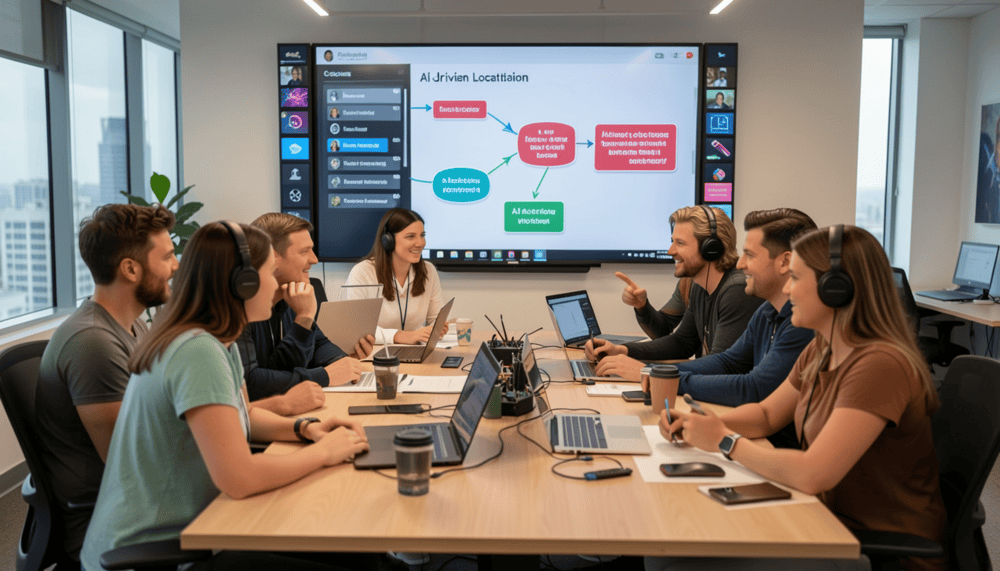
How Game Studios Use AI to Scale Localization Without Losing Quality
The game studios employ the use of AI to scale localization through the application of machine translation, automation, and human review to manage the content localization process. The localization tools for games assist in enhancing the game development process while considering the quality of the content. The application of AI to scale localization in game development helps in the expansion of the game studios without compromising the quality of the games produced.
What Is Using AI to Scale Localization?
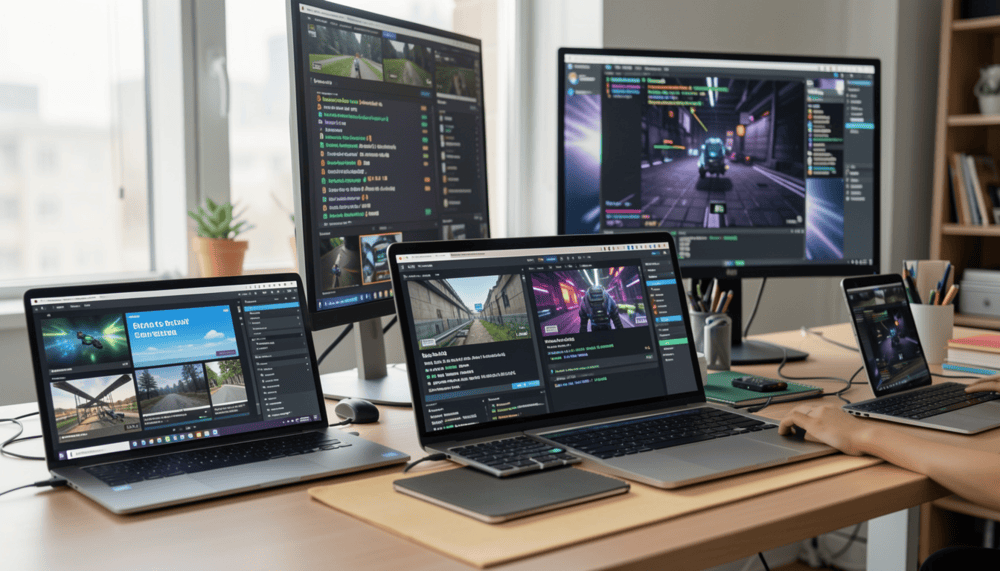
Using AI to scale localization in game development refers to integrating artificial intelligence technologies such as neural machine translation, terminology databases, and automated QA systems into the localization workflow. Rather than relying solely on manual translation, studios deploy AI localization tools for games to process large volumes of content quickly, then apply human review to refine tone, context, and compliance.
The scale of today's gaming industry explains why efficiency is critical. According to the 2023 Essential Facts About the Video Game Industry report published by the Entertainment Software Association, over 65 percent of American adults play video games, reflecting the mainstream adoption of gaming across demographics.
Globally, Statista estimates that the number of gamers worldwide exceeds 3 billion. This global audience creates constant pressure for studios to use AI to scale localization in order to release titles and updates simultaneously across multiple languages and regions.
Benefits of Using AI to Scale Localization
AI localization tools for games are particularly effective in live service models where content updates occur weekly or monthly. By automating repetitive tasks, studios can allocate human expertise to high-impact narrative segments.
Studios adopt AI to scale localization for practical and strategic reasons. Below are the primary benefits and real-world applications.
Key Benefits
- Faster turnaround for high word count projects
- Reduced localization bottlenecks during global launches
- Scalable multilingual releases across multiple regions
- Cost efficiency for ongoing content updates
- Automated terminology consistency checks
- Improved workflow integration with development pipelines
AI localization tools for games allow production teams to process UI strings, event updates, seasonal content, and patch notes quickly. This ensures players in different markets receive updates simultaneously.
Use Cases in Modern Game Production
- Mobile games with frequent content drops
- Live service titles requiring rapid localization cycles
- Early access releases are testing multiple regions
- Internal builds used for market validation
- Expansion packs and downloadable content
In practice, studios often combine AI with structured human oversight to scale localization. This blended model allows creative dialogue and culturally sensitive content to be handled manually while automation processes repetitive strings.
For companies planning expansion across Asia, selecting the right workflow matters. Digital-Trans Asia provides professional translation, interpretation, and localization services for businesses across Asia. A strategic combination of AI localization tools for games and experienced linguists can support both scalability and quality assurance.
Also read: How Webtoon Localization Expands Your Audience
How Game Studios Use AI to Scale Localization

Adopting AI localization tools for games requires structured implementation rather than simple automation. Below is a typical workflow used by professional studios.
1. Content Extraction and Preparation
Developers extract all player-facing text, including dialogue, tutorials, system notifications, and monetization prompts. Structured tagging ensures that AI systems recognize placeholders and variables.
2. Automated Draft Translation
Machine translation engines generate multilingual drafts. This step allows studios to use AI to scale localization efficiently across multiple languages at once.
3. Contextual Enrichment
Screenshots, gameplay footage, glossaries, and style guides are provided to improve translation accuracy. Context enrichment helps AI localization tools for games produce more reliable drafts.
4. Human Post Editing
Professional linguists refine AI-generated content. They correct tone inconsistencies, adapt cultural references, and ensure clarity. This human layer is critical for preserving narrative depth.
5. Terminology and Consistency Validation
AI systems automatically flag inconsistent terminology. Editors then verify corrections to maintain brand identity and gameplay consistency across all regions.
6. In-Game Testing and Linguistic QA
Localized builds are tested in real gameplay conditions. Truncation, formatting issues, and contextual mismatches are corrected before release.
This structured workflow allows studios to use AI to scale localization without sacrificing immersion or usability.
Also read: Should Names Be Translated? Key Factors to Consider for Global Brands
Common Mistakes Using AI to Scale Localization
Although using AI to scale localization offers efficiency and scalability, improper implementation can introduce measurable quality and reputational risks. AI localization tools for games are powerful, but they require structured oversight, contextual input, and continuous validation to function effectively within professional production environments.
Overreliance on Automation
Using AI localization tools for games without human review increases the likelihood of literal translations and contextual errors. Machine translation engines process text statistically, which means they often prioritize probability over intent. Without post-editing, important gameplay nuances may be misinterpreted.
For example, system prompts that depend on variable placeholders or conditional logic may be translated incorrectly if context is missing. When studios attempt to use AI to scale localization without allocating resources for review, they risk publishing content that feels mechanical or confusing to players.
Lack of Cultural Adaptation
AI systems may not fully capture humor, idioms, slang, or region-specific sensitivities. Cultural meaning often depends on shared social context rather than direct word equivalents. When studios rely solely on AI localization tools for games, culturally sensitive content may pass through unadjusted.
This can lead to unintended offense or player dissatisfaction. Effective use of AI to scale localization requires cultural review processes to ensure localized content resonates authentically.
Inconsistent Character Voice
Without narrative oversight, AI-generated dialogue may vary in tone across scenes. A character who speaks formally in one scene may suddenly shift to casual phrasing in another if the system interprets similar source lines differently. This inconsistency breaks immersion, particularly in story-driven or character-focused games.
AI localization tools for games do not inherently track character development arcs. Editors must enforce style guides and character profiles to preserve voice consistency.
Insufficient Testing
Skipping linguistic QA can lead to truncation issues, mistranslated variables, and unclear instructions. Even if translations appear correct in spreadsheets, they may not fit within UI constraints once implemented in the build.
AI localization tools for games cannot independently evaluate layout expansion, font rendering, or platform-specific limitations. In-game testing remains essential when using AI to scale localization.
Poor Glossary Management
If terminology databases are incomplete or outdated, using AI to scale localization may produce inconsistent translations across updates. Key gameplay terms such as skill names, item descriptions, or monetization labels must remain consistent to avoid player confusion.
Without centralized terminology management, repeated updates may introduce variation in core terms. Structured glossary governance strengthens the effectiveness of AI to scale localization.
Ignoring Regional Compliance Requirements
Certain markets enforce regulations regarding violence, gambling mechanics, or culturally sensitive imagery. AI systems do not independently assess legal or compliance risks. Studios using AI localization tools for games must integrate regional review checkpoints to prevent regulatory issues.
When using AI to scale localization across multiple territories, compliance screening should be embedded into the workflow. Human oversight ensures that content aligns with local distribution standards.
Underestimating Post-Editing Effort
Some studios assume AI dramatically reduces workload without factoring in post-editing time. In reality, complex narrative content may require extensive rewriting. AI localization tools for games improve speed, but the quality of source text and contextual documentation directly affects revision effort. To successfully scale localization with AI, studios must plan realistic timelines for editing and QA.
Also read: 10 Game Localization Examples That Boosted Sales Worldwide
FAQ
1. Can AI fully replace human translators in game localization?
No. AI localization tools for games assist with efficiency, but human linguists are essential for narrative accuracy, contextual interpretation, and cultural nuance. Complex dialogue, humor, and emotional storytelling still require professional judgment.
2. When should studios use AI to scale localization?
AI works best for high volume, repetitive, or structured content such as UI text, patch notes, system notifications, live service updates, and technical strings. In these scenarios, using AI to scale localization improves turnaround time without heavily affecting narrative depth.
3. Does AI reduce localization costs?
Using AI to scale localization can reduce production time and operational costs by accelerating first draft translation and minimizing repetitive manual work. However, quality assurance, terminology management, and post-editing still require professional resources to maintain standards.
4. Is AI suitable for story-driven games?
AI can generate initial drafts for dialogue and descriptions, but human editing is necessary to maintain character consistency, emotional tone, and story continuity. AI localization tools for games support workflow efficiency, yet narrative-heavy titles depend on editorial refinement.
5. How do studios maintain quality when using AI localization tools for games?
Studios combine automated translation with structured glossaries, translation memory systems, human post-editing, linguistic QA, and in-game testing. This hybrid model ensures that AI scales localization to support productivity without compromising immersion or usability.
6. Does AI improve time to market?
Yes. Using AI to scale localization enables simultaneous multilingual production pipelines, which helps studios prepare multiple language versions in parallel. This reduces delays in global launches and supports synchronized regional releases.
7. Is hybrid localization becoming standard?
Yes. Many studios integrate AI localization tools for games into their production ecosystems while preserving human oversight for high-impact narrative, marketing content, and compliance review. Increasingly, the industry views AI for scaling localization as a strategic tool rather than a replacement for expertise.
8. What types of content should not rely solely on AI?
Story-critical dialogue, culturally sensitive content, legal disclaimers, and monetization messaging should not rely entirely on AI localization tools for games. These areas require contextual accuracy and regulatory awareness that benefit from human evaluation.
9. How important is glossary management when using AI?
Glossary management is essential. When studios use AI to scale localization, consistent terminology ensures that character names, skills, in-game items, and system labels remain uniform across updates and expansions.
10. Can small studios benefit from AI-driven localization?
Yes. Smaller teams can use AI localization tools for games to handle early-stage multilingual drafts efficiently. With structured review processes, even limited teams can use AI to scale localization while maintaining professional quality standards.
Conclusion
As multilingual releases become standard practice, studios must integrate efficiency with regional precision. AI localization tools for games enable rapid expansion, but sustainable quality relies on structured workflows and expert validation.
Applying AI to scale localization across Asia introduces layers of complexity, from cultural adaptation to legal approval processes. Each market presents distinct operational considerations.
Collaborating with experienced regional localization providers can help studios manage language adaptation, regulatory alignment, and production challenges across diverse Asian markets.
Ready to scale your game localization for Asian markets? Visit https://digital-trans.asia/ to learn more about our services. Contact us today to get started!