
Sign Language Interpreters: The Role in Professional and Community Settings
Sign language interpreters are essential language professionals who enable effective communication between Deaf or hard-of-hearing individuals and hearing people. As accessibility and inclusion become standard expectations in modern societies, sign language interpreters play a critical role in ensuring equal participation across professional and community environments.
This article explains what sign language interpreters do, how they function in professional and community settings, what standards guide their work, and why their role remains essential in both institutional and social contexts. Read on to explore their functions and the standards that guide their work.
What Are Sign Language Interpreters?
Sign language interpreters are trained professionals who facilitate communication between users of sign language and users of spoken language. Their role is to accurately convey meaning between different language modalities while preserving intent, tone, and context.
Sign language interpreters do not simplify, edit, or add personal opinions to messages. Instead, they deliver complete and faithful interpretations that allow both parties to communicate directly. This role requires fluency in at least one sign language and one spoken language, as well as a strong understanding of Deaf culture.
What Is the Core Role of Sign Language Interpreters?
The core role of sign language interpreters is to ensure equal access to communication. They enable Deaf individuals to participate fully in conversations, decision-making processes, and public life. This role involves:
- Transliterating or interpreting spoken language into sign language and vice versa
- Maintaining neutrality and accuracy
- Managing communication flow without becoming a participant
Additionally, sign language interpreters act as communication facilitators, not advocates or advisors, unless their professional scope explicitly includes additional responsibilities.
Why Are Sign Language Interpreters Important in Professional Settings?
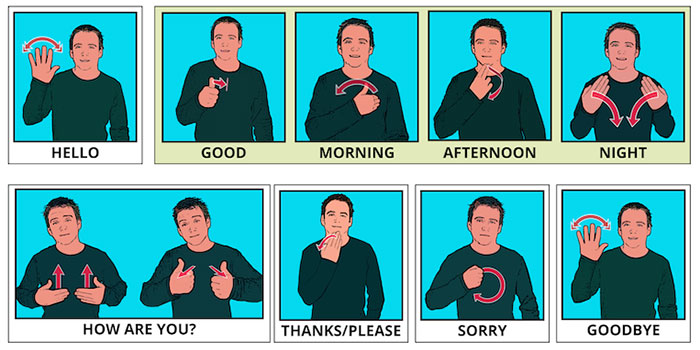
Sign language interpreters are essential in professional settings since communication accuracy directly affects outcomes, rights, and responsibilities. In professional environments, miscommunication can lead to exclusion, legal risk, or ethical violations.
Furthermore, professional settings require interpreters who understand formal language, specialized terminology, and professional conduct. The presence of qualified sign language interpreters supports compliance with accessibility standards and ensures equal participation.
Benefits / Use Cases
How Do Sign Language Interpreters Support Education and Academic Access?
In educational settings, sign language interpreters provide Deaf students with access to instruction, discussion, and academic content. They interpret lectures, classroom interactions, and institutional communication in real time. As a result, sign language interpreters in education must:
- Convey complex academic terminology
- Reflect the instructor's teaching style
- Support interactive learning environments
Ultimately, their role enables Deaf learners to engage with curriculum content at the same pace as hearing peers.
What Role Do Sign Language Interpreters Play in Healthcare?
In healthcare environments, sign language interpreters facilitate communication between patients and medical professionals. Accurate interpretation is essential for diagnosis, treatment decisions, and informed consent. In line with this, healthcare sign language interpreters ensure that:
- Medical information is clearly understood
- Patients can describe symptoms accurately
- Confidentiality is maintained
Moreover, their presence contributes to patient safety, ethical care, and trust between providers and patients.
How Are Sign Language Interpreters Used in Legal and Government Contexts?
Legal and government settings mandate sign language interpreters to uphold strict standards of accuracy and neutrality. These settings include courts, police interviews, administrative hearings, and public services. Their role supports due process and equal access to justice. As a result, sign language interpreters in this context:
- Ensure Deaf individuals understand legal proceedings
- Accurately convey testimony and statements
- Maintain impartiality at all times
How Do Sign Language Interpreters Function in Workplace and Corporate Environments?
In workplace and corporate settings, sign language interpreters support communication during meetings, training sessions, interviews, and professional events. Their role helps organizations:
- Comply with accessibility policies
- Promote inclusive work cultures
- Enable Deaf employees to contribute fully
Accordingly, professional sign language interpreters in corporate environments must be familiar with business terminology, organizational structures, and professional communication norms.
What Is the Role of Sign Language Interpreters in Community Settings?
Sign language interpreters support access to information, social participation, and public engagement from a community settings perspective. These settings include public events, religious services, community meetings, and social programs. In summary, community interpreting focuses on:
- Accessibility
- Public inclusion
- Social connection
In other words, sign language interpreters help ensure that Deaf individuals are not excluded from shared community experiences.
How Do Sign Language Interpreters Support Public Events and Social Services?
At public events, sign language interpreters provide live interpretation for speeches, announcements, and performances. Meanwhile, in social services, they support communication between service providers and Deaf individuals. These roles help:
- Improve access to essential services
- Reduce communication barriers
- Build trust within communities
On the other hand, public-facing interpreting often requires high visibility and adaptability. That is why the briefing and rehearsal are crucial preparation.
What Professional Standards Guide Sign Language Interpreters?
Professional sign language interpreters follow ethical and professional standards designed to protect all parties involved. These standards typically include:
- Accuracy and completeness
- Confidentiality
- Professional boundaries
- Impartiality
In accordance with that, training and certification programs emphasize these principles to ensure consistent quality across interpreting contexts.
What Skills Are Required to Become a Professional Sign Language Interpreter?
Professional sign language interpreters require a combination of linguistic, cognitive, and interpersonal skills. These include:
- Fluency in sign language and spoken language
- Strong memory and concentration
- Cultural competence
- Emotional regulation
Additionally, interpreter training programs focus on both technical skill development and ethical decision-making.
Common Mistakes / Risks
What Challenges Do Sign Language Interpreters Commonly Face?
Sign language interpreters often face challenges related to workload, emotional strain, and public misunderstanding of their role. Common challenges include:
- Mental fatigue from sustained concentration
- Interpreting sensitive or high-stakes content
- Unrealistic expectations from clients
Addressing these challenges requires professional support, clear role boundaries, and continued education.
What is Regional Growth of Sign Language Interpreting in Asia-Pacific?
The Asia-Pacific region is experiencing steady growth in accessibility awareness. Governments, educational institutions, and private organizations are increasingly investing in interpreter training programs, accessibility regulations, and inclusive communication policies.
Countries such as Indonesia, Japan, South Korea, Australia, and Singapore are at different stages of development, but share a common goal: improving access for Deaf communities through professional sign language interpreters.
Additionally, this regional growth also facilitates opportunities for cross-border collaboration and standardization.
How Is Technology Affecting the Work of Sign Language Interpreters?
Technology has expanded access to sign language interpreting through Video Remote Interpreting (VRI) and online platforms. These tools increase flexibility and reach, especially in remote or underserved areas.
However, technology does not replace professional expertise. Human sign language interpreters remain essential for:
- Contextual judgment
- Cultural sensitivity
- Complex or emotionally charged communication
Digital Trans Asia provides professional translation, interpretation, and localization services for businesses across Asia. This demonstrates that language services continue to deliver value through professional expertise, regardless of advancements in technology. Technology serves as a flexible tool that supports well-trained and experienced professionals in achieving effective outcomes.
This is the true meaning of transformation. Human expertise remains central to innovation, as technology without strong work ethics and professional standards cannot deliver meaningful results. Digital-Trans Asia upholds this principle and remains a reliable partner for its clients.
Why Will Sign Language Interpreters Remain Essential in the Future?
Sign language interpreters will continue to play a vital role as societies prioritize accessibility and inclusion. Legal requirements, institutional policies, and social awareness all contribute to sustained demand. Their role remains essential because:
- Language access is a fundamental right
- Human communication requires context and judgment
- True inclusion is predicated on effective communication
Professional and community settings alike rely on qualified sign language interpreters to ensure equal participation.
Conclusion
Sign language interpreters are indispensable communication professionals who support access, equity, and participation. Their role spans education, healthcare, legal systems, workplaces, and community life.
By adhering to professional standards and maintaining linguistic accuracy, sign language interpreters ensure that communication barriers do not become barriers to opportunity. As accessibility expectations continue to evolve, their role in professional and community settings remains both relevant and necessary.
Ready to access professional interpretation services for your business across Asia? Visit https://digital-trans.asia/ to learn more about our services. Contact us today to get started!