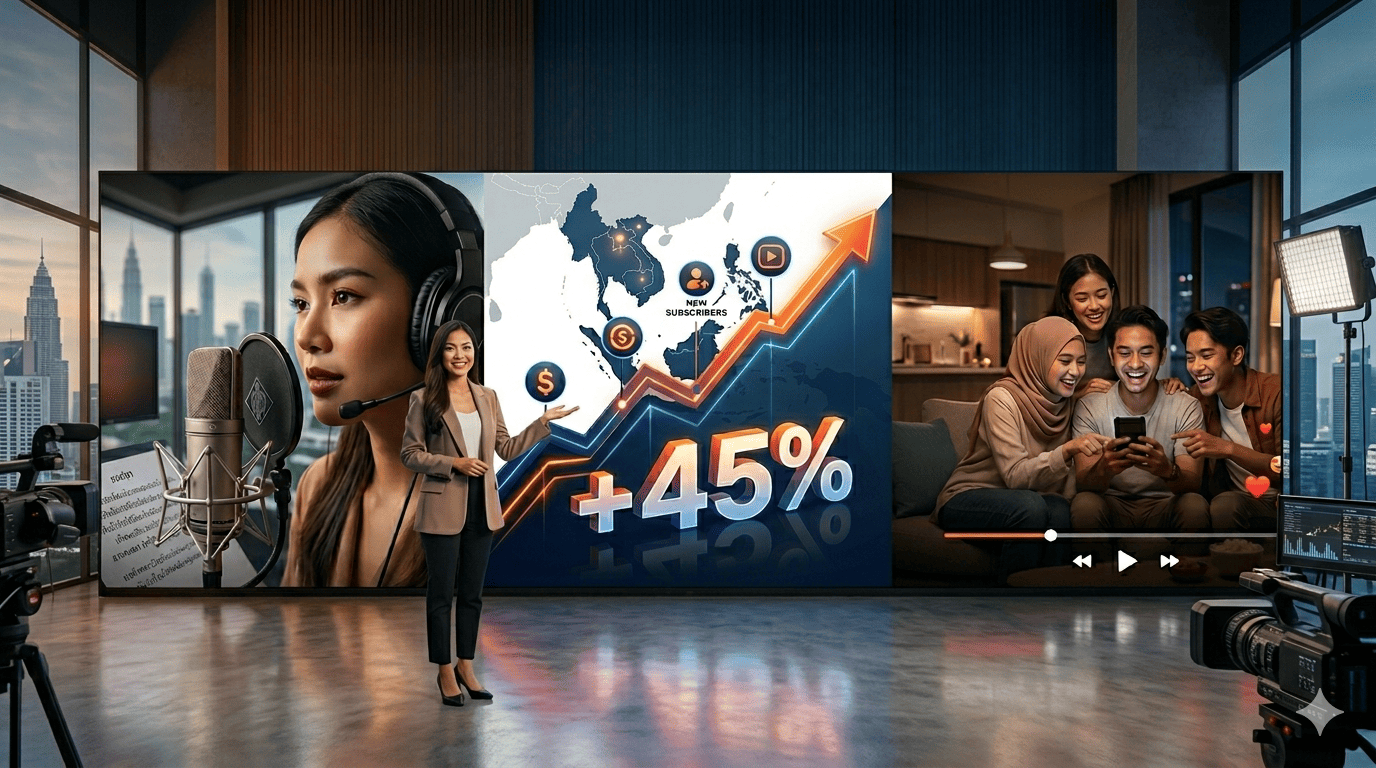
Why Short Drama Localization in Southeast Asia Drives Streaming Growth
The shift toward short drama localization in Southeast Asia is driving streaming growth by making content more accessible and culturally relevant to local audiences. With the surging demand for short dramas on mobile devices, localization is no longer just about having great storylines. Localization enhances viewer engagement since it strengthens the bond between viewer and content, thereby attracting broader audiences.
What Is Short Drama Localization in Southeast Asia?
Short drama localization in Southeast Asia is the process of adapting short-form scripted video content for local audiences in markets such as Indonesia, Thailand, Vietnam, Malaysia, the Philippines, and Singapore.
Localization goes beyond translation; it ensures that dialogue, emotional tone, subtitles, cultural elements, and marketing materials feel tailor-made for the local market.
Localization of short drama includes:
- Subtitles
- Voice dubbing and voice-overs
- Cultural nuances
- UI and app interfaces
- Local promotional assets
- Metadata
Unlike traditional television dramas, short dramas rely on immediate emotional engagement. Since viewers can easily skip content after only a few seconds, localized language and culturally appropriate storytelling play an even greater role in audience retention.
Southeast Asia presents a particularly attractive market because of its linguistic diversity. Hundreds of languages and dialects are spoken across the region, while English proficiency varies significantly between countries. This makes localization a necessity rather than an optional enhancement.
According to DataReportal, Southeast Asia is among the world's most connected regions, with mobile internet penetration ranging from about 80% to more than 95% across different countries. Mobile-first viewing habits make short drama platforms especially appealing for regional audiences.
Why Southeast Asia Is Becoming a Hotspot for Short Drama Platforms
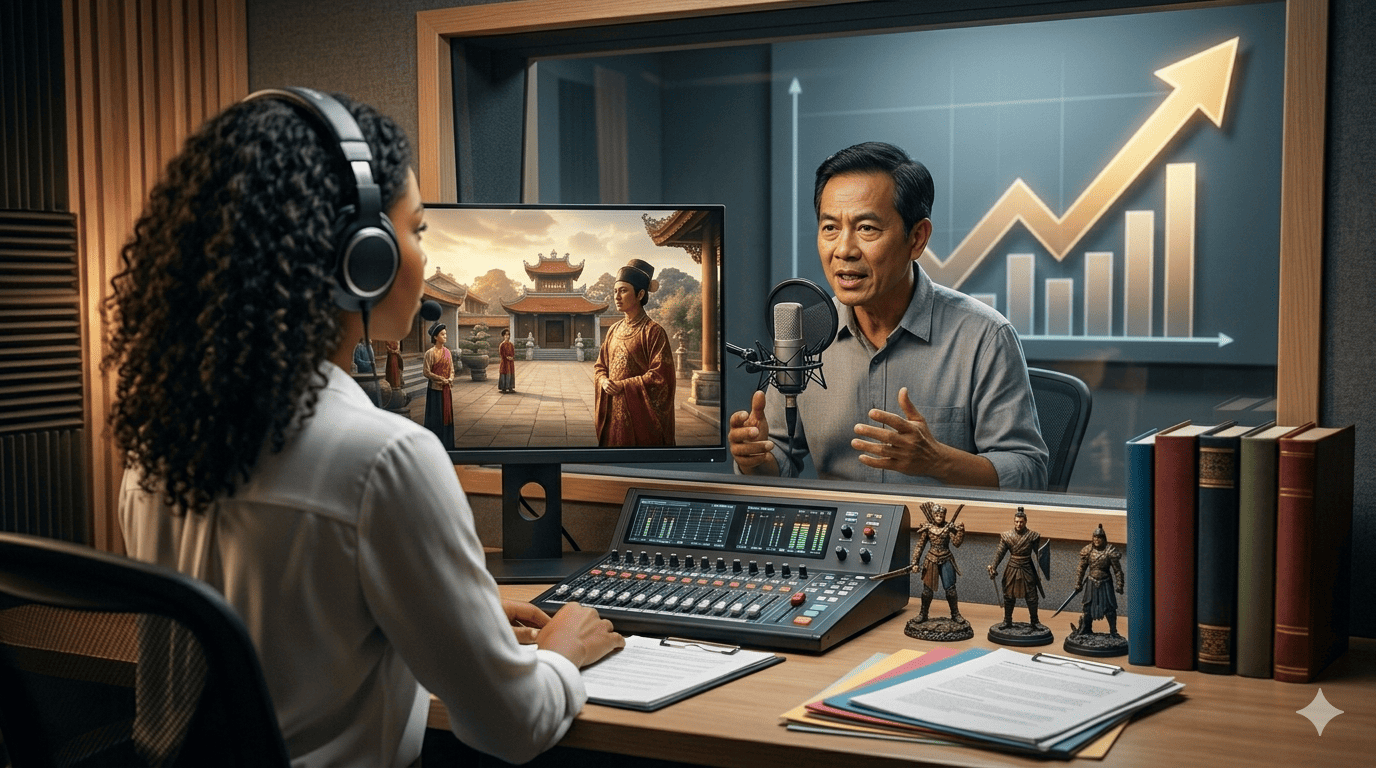
Over the past few years, short drama apps originating from China have rapidly expanded into international markets. Many now target Southeast Asia because of its young population, increasing smartphone penetration, affordable mobile internet, and growing demand for digital entertainment.
Several factors contribute to this growth:
Mobile-First Audiences
Most users consume streaming content on smartphones rather than desktop computers. Short episodes fit naturally into commuting, lunch breaks, or waiting times.
Strong Digital Adoption
According to Google's e-Conomy SEA reports, Southeast Asia continues to experience rapid growth in digital consumers, with millions of new internet users joining every year.
Diverse Languages
Indonesia alone features hundreds of regional languages alongside Bahasa Indonesia, making localization essential across the region.
Growing Competition
As more streaming services enter the market, user experience becomes a major differentiator. High-quality localization can significantly improve viewer satisfaction and reduce content abandonment.
Benefits of Short Drama Localization in Southeast Asia
Professional localization provides measurable business advantages for streaming platforms and content owners.
Higher Viewer Engagement
When viewers understand dialogue naturally, they stay engaged longer. Research from CSA Research consistently shows that consumers prefer content in their native language, even when they understand English. Native-language experiences improve trust and overall user satisfaction.
Better Subscriber Retention
Localization helps create emotional connections between audiences and characters. If subtitles feel unnatural or dubbing sounds awkward, viewers may stop watching before completing an episode.
Increased Market Reach
One localized series can reach multiple countries with relatively small production adjustments.
For example:
- Mandarin drama localized into Indonesian
- Korean drama localized into Thai
- Japanese short drama localized into Vietnamese
Each localized version creates opportunities for new audiences without producing entirely new content.
Improved App Store Visibility
Localized titles, descriptions, keywords, and promotional materials improve discoverability within local app stores and search engines.
This supports both traditional SEO and app store optimization (ASO).
Stronger Brand Reputation
Consistent localization demonstrates respect for local audiences.
Poor translations, on the other hand, can quickly spread across social media and damage brand perception.
Higher Return on Content Investment
Producing original content requires significant capital. Localization allows streaming platforms to maximize ROI by distributing content across multiple language markets.
According to Nimdzi Insights, companies that invest in localization generally expand faster into international markets while improving customer experience.
How Short Drama Localization Works
Although workflows vary between companies, professional localization usually follows several structured steps.
1. Content Analysis
Localization specialists first evaluate:
- Target audience
- Genre
- Emotional tone
- Cultural references
- Sensitive expressions
- Character personalities
Understanding context before translation improves consistency throughout the series.
2. Translation
Professional translators convert dialogue into the target language while preserving meaning rather than translating word-for-word.
For short dramas, maintaining emotional impact is often more important than preserving identical sentence structures.
3. Cultural Adaptation
Some jokes, idioms, slang, or social references may not work in another country.
Localization experts adapt these elements to create equivalent emotional responses.
For example, swapping unfamiliar cultural tropes for locally recognizable equivalents improves viewer comprehension while preserving the original intent.
4. Subtitle Timing
Subtitle localization includes more than translating text.
Professionals also adjust:
- Reading speed
- Line breaks
- Character limits
- Synchronization
- Scene transitions
Poor subtitle timing can make even accurate translations difficult to follow.
5. Dubbing or Voice Localization
When platforms opt for dubbing, voice actors recreate performances that match the original emotion, pacing, and character personality.
High-quality dubbing also considers lip synchronization where appropriate.
6. Quality Assurance
Native-language reviewers verify:
- Translation accuracy
- Consistency
- Grammar
- Cultural appropriateness
- Subtitle synchronization
- Technical formatting
Quality assurance helps eliminate errors before publication.
7. Localized Marketing
Localization continues beyond the video itself.
Streaming platforms also localize:
- Social media campaigns
- App descriptions
- Email marketing
- Push notifications
- Landing pages
- Advertising creatives
Consistent localization strengthens the overall customer experience.
Common Mistakes and Challenges
Even experienced companies can encounter localization issues.
Literal Translation
Literal translations often lose emotional resonance. Translators must focus on narrative intent and conversational naturalness instead.
Ignoring Cultural Context
Expressions that work in one country may confuse viewers elsewhere. Professional localization includes cultural review to identify potential misunderstandings.
Overlooking Subtitle Readability
Long subtitles force viewers to choose between reading and watching. Keeping subtitles concise improves viewing comfort.
Inconsistent Terminology
Character names, fictional locations, recurring phrases, and technical terms should remain consistent throughout an entire series.
Translation glossaries and style guides help maintain uniformity.
Using Only Machine Translation
While AI translation tools have advanced significantly, they still struggle with sarcasm, humor, emotional nuance, and regional slang.
Human review remains essential for entertainment content.
Failing to Localize Marketing Content
Some companies localize only subtitles while leaving promotional materials in English. This creates an inconsistent experience that can reduce marketing effectiveness.
Delayed Localization Planning
Waiting until production is complete often increases costs and extends release schedules. Planning localization earlier allows smoother international launches.
Best Practices for Successful Localization
Streaming companies can improve localization quality by following several proven practices:
- Involve localization teams early in production.
- Create terminology databases and translation memories.
- Use native-speaking linguists for each target market.
- Conduct linguistic quality assurance before release.
- Test subtitles across different mobile screen sizes.
- Gather viewer feedback after launch.
- Update translations based on audience behavior and engagement metrics.
Combining AI-assisted workflows with experienced human linguists often produces the most accurate and scalable results. Digital-Trans Asia provides professional translation, interpretation, and localization services for businesses across Asia.
FAQ
What is short drama localization?
It is the process of adapting short-form scripted video content into another language while preserving cultural meaning, emotional tone, and viewer experience.
Why is Southeast Asia important for short drama platforms?
Southeast Asia features a massive mobile-first population, expanding internet infrastructure, high linguistic diversity, and rapidly growing demand for digital entertainment, making it a key region for streaming expansion.
Is localization different from translation?
Yes. Translation converts language, while localization adapts content to fit cultural expectations, local expressions, and audience preferences.
Are subtitles enough for localization?
Not necessarily. Depending on the market, platforms may also require dubbing, UI localization, marketing adaptation, and cultural fine-tuning.
Can AI replace human localization?
AI can speed up translation workflows, but human linguists remain essential for handling humor, emotions, cultural references, and quality assurance.
Which languages are commonly localized in Southeast Asia?
Popular target languages include Indonesian, Thai, Vietnamese, Malay, Filipino, and English, depending on the platform's expansion strategy.
Does localization improve streaming performance?
Yes. Better localization can increase viewer engagement, completion rates, subscriber retention, and international reach by making content more accessible and culturally relevant.
What should companies prepare before localization begins?
They should provide scripts, character information, terminology lists, style guides, and production context to help translators produce consistent and accurate results.
How long does short drama localization usually take?
The timeline depends on the number of episodes, target languages, and required services such as subtitling, dubbing, and quality assurance. Early planning generally shortens production schedules.
Conclusion
Short drama localization in Southeast Asia is becoming an essential strategy for streaming platforms seeking sustainable regional growth. Effective localization helps audiences connect with stories more naturally, improves viewer engagement, and supports subscriber retention.
As competition among streaming platforms increases, audiences expect content that feels authentic in their own language. Professional localization unites linguistic expertise, cultural insight, and technical quality control to deliver a seamless viewing experience.
Ready to localize your short drama content for Southeast Asian audiences? Visit https://digital-trans.asia/ to learn more about our services. Contact us today to get started!