How Multilingual Video Content Boosts Museum Visitor Experiences
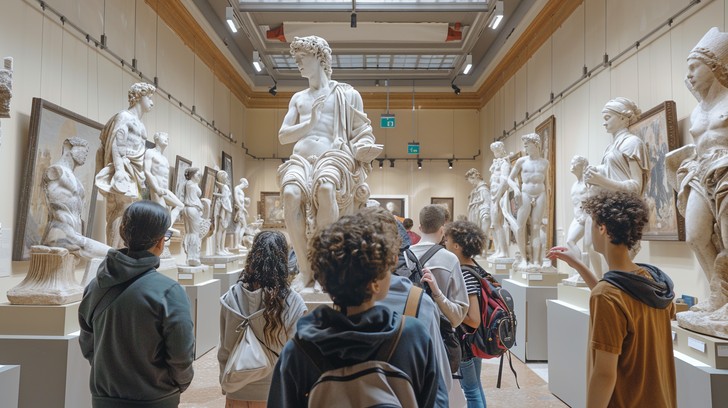
Museums welcome visitors from different countries, language backgrounds, and levels of familiarity with local history. Yet even a well-designed exhibition is difficult to appreciate when its explanations are available in only one language. To address this issue, multilingual video content makes a meaningful difference by combining narration, subtitles, visuals, and storytelling in multiple languages.
However, effective museum localization involves adapting content, so that visitors understand the historical context, cultural references, and intended meaning of an exhibition. When executed well, this supports learning, accessibility, and engagement without replacing the authenticity of the original collection.
What Is Multilingual Video Content in Museums?
Multilingual video content refers to museum videos that are produced or adapted for audiences who speak different languages. These may include exhibition introductions, object explanations, historical documentaries, educational animations, curator interviews, and interactive digital displays.
For instance, a museum might offer a five-minute video about an ancient artifact in English, Indonesian, Japanese, and Mandarin. Visitors could select their preferred language through a touchscreen, QR code, mobile guide, or audio-visual installation. This aims to help visitors understand why an object matters, how it relates to its historical setting, and what they learn from it.
UNESCO describes heritage interpretation as a range of activities intended to increase public awareness and understanding. Its guidance includes electronic publications, educational programmes, and other forms of communication, while emphasizing access, inclusiveness, authenticity, and evaluation. Consequently, multilingual video is a practical extension of broader interpretation strategies rather than a separate activity.
Research also supports the significance of interpretation in museum experiences. A 2015 study of the Paddy Museum in Malaysia found a positive association between effective cultural heritage interpretation and visitor satisfaction. Although the study did not specifically examine multilingual video, it demonstrates why the quality of communication matters alongside the objects themselves.
Benefits and Use Cases of Multilingual Museum Videos
Multilingual video content supports several museum goals, from improving visitor understanding to reaching new audiences.
-
Enhancing access to exhibition information. Visitors who are not fluent in the museum’s primary language are able to follow explanations more comfortably through translated narration or subtitles. This reduces the need to rely entirely on companions or external translation tools.
-
Supporting deeper cultural understanding. Historical objects often carry meanings that are difficult to communicate through short labels alone. A localized video can explain the object’s background, significance, and relationship to the community that created it.
-
Making complex topics easier to understand. Museum videos are produced by combining animation, archival images, maps, and narration to explain scientific processes, historical events, or conservation techniques. Multilingual versions allow more visitors to access the same educational content.
-
Creating a more welcoming visitor experience. Offering language choices can signal that international visitors and multilingual communities are considered part of the museum’s audience. This supports the broader goal of inclusive cultural participation.
-
Extending learning beyond the exhibition space. Visitors can access translated videos before or after a visit through museum websites, mobile guides, or social media. This creates opportunities for preparation, reflection, and continued learning.
-
Supporting school and family visits. Multilingual videos help children and parents understand exhibits together, especially when family members speak different languages. Short, visual explanations may also be useful for younger audiences.
-
Reaching audiences through digital platforms. Museum videos are shared through online exhibitions, virtual tours, and educational platforms. Localization makes this content more relevant to audiences who may never visit the physical museum.
Furthermore, a 2023 review of museum translation practices by Ghazi and Reema, published in Journal of Museum Education, highlights that museums are increasingly expanding multilingual interpretation beyond the traditional needs of tourists. It also emphasizes the importance of planning, staffing, and assessment when developing translation work. This suggests that multilingual content should be treated as part of a museum’s long-term communication strategy.
How Museum Localization Works
Creating effective multilingual video content requires more than translating words from the source language into the target language. The following process assists museums in maintaining accuracy, clarity, and cultural relevance.
-
Identify the target audiences and languages. Begin by reviewing visitor demographics, existing audience research, and the languages most relevant to the museum’s goals. A museum serving international tourists may prioritize different languages from one serving a multilingual local community.
-
Select the most suitable video content. Not every museum video needs to be translated immediately. Start with content that explains important collections, supports popular exhibitions, or addresses topics that visitors frequently find difficult to understand.
-
Prepare the original script and cultural context. The source script should be factually accurate and written in language that is clear and appropriate for the intended audience. Translators need sufficient background information about historical terms, names, objects, and cultural references.
-
Translate and adapt the content. This is the central stage of museum localization. Translators should preserve the meaning and tone of the original while adapting expressions that may not work naturally in another language. Dates, measurements, names, and culturally specific references may also require careful treatment.
-
Create subtitles, narration, or both. Museums can choose between translated subtitles, dubbed narration, multilingual audio tracks, or a combination of these formats. The choice depends on the exhibition environment, audience needs, and available resources.
-
Review the localized version with relevant experts. Language review should be combined with museum and cultural review. Subject-matter experts need to check historical accuracy, while native-language reviewers assess naturalness, terminology, and clarity.
-
Test the video with visitors. Before a full launch, museums should conduct usability testing with people who speak the target languages. Their feedback will reveal problems with subtitle speed, pronunciation, audio quality, or confusing explanations.
-
Measure and improve performance. Evaluation may include video completion rates, language selection data, visitor feedback, and changes in understanding or satisfaction. UNESCO’s heritage interpretation principles emphasize the significance of research, training, and evaluation in communication strategies.
Common Mistakes and Risks in Museum Localization
Despite its benefits, multilingual video content can introduce challenges when localization is treated as a purely technical task.
Literal translation without cultural adaptation
A word-for-word translation may be grammatically correct, but still sound unnatural or fail to communicate the intended meaning. Museum content often includes historical terminology, idioms, and culturally specific concepts that require contextual adaptation.
Overloading the video with information
Combining multiple languages into a single video makes it overly long and difficult to follow. If every language is presented in the same video, visitors may spend more time waiting for information that does not match their needs. Separate audio tracks or selectable subtitles can provide a more flexible solution.
Using inaccurate or inconsistent terminology
Names of historical figures, places, artifacts, and technical concepts should be translated consistently. Errors affect the trust, particularly in museums that communicate scientific or historical information.
Relying entirely on automated translation
AI-assisted translation assists museums prepare multilingual content more efficiently, particularly when working with large collections of exhibition text. However, human review remains important for accuracy, cultural nuance, and natural language. A 2023 study by Yang and Cui, published in Corpus-based Studies across Humanities, examines AI-assisted translation and communication of Chinese museum culture.
The authors discuss how AI supports the translation of culturally complex material, while human post-editing helps elevate the quality of the final translation. This suggests that AI can be a useful tool in museum localization workflows, but it should complement rather than replace human expertise.
Ignoring accessibility
Multilingual content should not focus only on spoken language. Clear subtitles, readable text, appropriate contrast, and accessible controls help more visitors engage with the material. UNESCO’s 2026 discussion of universal accessibility in museums emphasized that inclusion extends beyond physical access to informational, emotional, and participatory access.
Failing to evaluate visitor outcomes
A video may receive many views without necessarily improving understanding. Museums should consider whether visitors are able to follow the explanation, connect it to the exhibition, and retain useful information after the visit.
Frequently Asked Questions
How can museums make multilingual video content accessible to visitors?
Museums can provide language options through subtitles, dubbed narration, multilingual audio tracks, QR codes, mobile guides, or interactive displays. The best format depends on the exhibition environment and visitor needs.
What are the main challenges of museum localization?
Common challenges include maintaining historical accuracy, adapting cultural references, keeping terminology consistent, and ensuring the translated content sounds natural in each target language.
How can AI support museum localization?
AI assists in transcription, translation, subtitle creation, and other repetitive localization tasks. However, human review remains important for checking historical accuracy, cultural nuance, terminology, and natural language before the content is published.
How can museums measure the effectiveness of multilingual videos?
Museums can track metrics such as language selections, video completion rates, visitor feedback, and engagement, as well as conduct surveys or usability testing to determine whether visitors better understand the exhibition content.
Why Professional Localization Partners Matter for Multilingual Video Content
Need to localize museum content with confidence? Digital-Trans Asia provides professional translation, interpretation, and localization services for businesses across Asia.
Professional language services will help ensure your multilingual videos remain accurate, culturally appropriate, and engaging for every audience.
Conclusion
Multilingual video content transforms language diversity into an opportunity for stronger visitor engagement. Through localized narration, subtitles, and visual storytelling, museum videos make complex information easier to understand while supporting more inclusive cultural experiences.
The key is to approach museum localization as an interpretation and accessibility project, not simply a translation exercise. With careful planning, cultural review, accessible design, and ongoing evaluation, museums can create videos that communicate their collections more clearly and help visitors connect with the stories behind them.