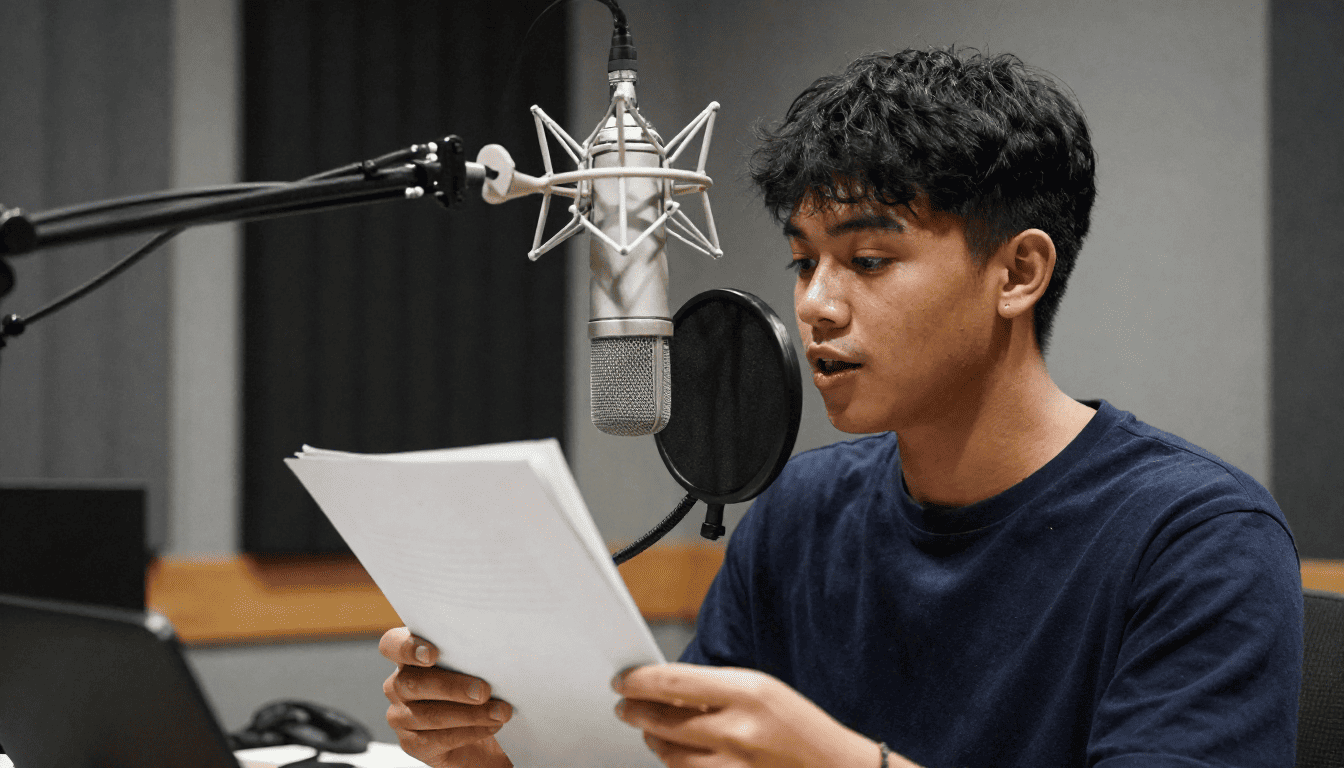
How Southeast Asia Dubbing Services Drive Content Growth
Content growth increasingly depends on how effectively audiences understand and connect with materials in their native language. Southeast Asian dubbing services help media companies, streaming platforms, game publishers, e-learning providers, and brand marketers scale their reach through accessible, localized content. The rise in demand for localization of content has made dubbing an essential tool for engaging the audience and growing the business.
What Are Dubbing Services in Southeast Asia?
Dubbing services in Southeast Asia involve replacing the original dialogue in audio/video content with voiceover recorded in local languages, including Indonesian, Thai, Vietnamese, Malay, Filipino, Khmer, Burmese, and many others.
Unlike standard voiceover, professional dubbing encompasses script translation, cultural adaptation, voice casting, studio recording, audio engineering, lip synchronization, and rigorous post-production quality control to ensure that the final product sounds natural for local listeners while keeping the original meaning intact.
Southeast Asia is one of the most linguistically diverse parts of the world, having several hundred languages used by populations of its countries. According to official figures from ASEAN, Southeast Asia is home to over 680 million people, representing a vast, highly dynamic market for localized media.
Why Dubbing Matters in Southeast Asia
Language remains one of the biggest barriers to content consumption in Southeast Asia. While subtitles improve accessibility, many viewers prefer content in their native language because it feels more natural and immersive.
This is particularly important in a region where hundreds of languages and dialects are spoken, and cultural relevance often influences how audiences engage with digital media.
According to Statista, the demand for localized content continues to grow alongside the region's digital economy. Southeast Asia now has an internet penetration rate of more than 82%, with more than 500 million active internet users.
In addition, more than 60% of internet users across Southeast Asian markets pay for digital content each month, including video streaming subscriptions, music platforms, and online gaming services. These trends highlight the growing opportunity for content providers to reach audiences through localized experiences.
Benefits of Dubbing Services in Southeast Asia
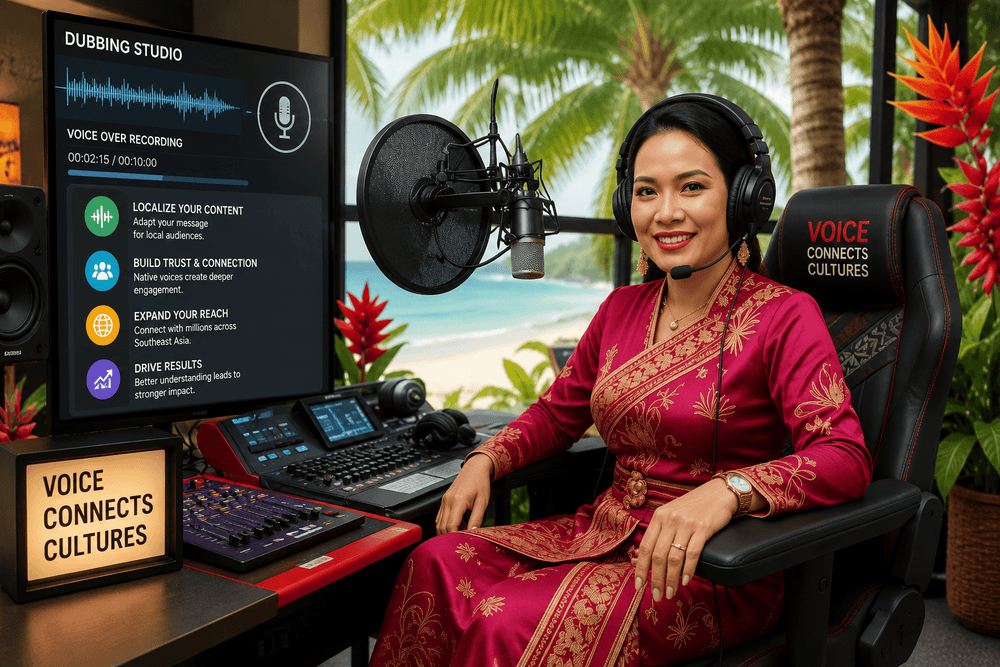
Professional dubbing offers several advantages for organizations seeking growth in regional markets.
Higher Audience Engagement
- Frees viewers to focus on visual storytelling rather than reading subtitles.
- Fosters deeper emotional connections through native-language performances.
- Drives higher completion rates by reducing cognitive fatigue.
For entertainment content such as films, television series, and animation, emotional engagement often directly impacts viewer satisfaction and retention.
Improved Accessibility
- Supports younger audiences who may struggle with subtitles.
- Helps viewers with reading difficulties.
- Makes educational content easier to understand.
This is particularly valuable for e-learning providers and training organizations targeting multilingual audiences across Southeast Asia.
Better Market Penetration
- Enables brands to enter new countries more effectively.
- Removes language barriers that may limit adoption.
- Creates a localized experience for regional audiences.
A single piece of content can reach multiple Southeast Asian markets when adapted into relevant languages.
Stronger Brand Trust
- Native-language communication demonstrates cultural awareness.
- Audiences often perceive localized content as more credible.
- Consistent language adaptation helps strengthen brand identity.
According to CSA Research's global studies on localization, language accessibility remains one of the strongest drivers of customer trust and engagement.
Increased Content ROI
- Dubbing maximizes existing IP value across new geographic territories.
- Localization extends the lifespan of digital assets.
- Companies can scale content distribution without producing entirely new materials.
For businesses investing heavily in video production, dubbing often provides a cost-effective method of expanding reach.
Greater Success for Streaming and Gaming Content
The gaming and entertainment industries rely heavily on localization.
Research from Nimdzi Insights has repeatedly highlighted that localization contributes significantly to user acquisition and retention in global entertainment markets. Players and viewers tend to spend more time engaging with content that feels culturally relevant and linguistically familiar.
How Dubbing Services in Southeast Asia Work
Professional dubbing involves much more than translating words. The process typically follows several stages.
1. Content Analysis
The dubbing team reviews the source material to understand:
- Target audience
- Content objectives
- Cultural considerations
- Technical requirements
This stage helps identify potential localization challenges before production begins.
2. Translation and Script Adaptation
Professional linguists translate the original script into the target language.
Rather than producing literal, word-for-word translations, linguists adapt dialogue to preserve intent, humor, emotional resonance, and cultural nuance.
This step is especially important when localizing content for audiences in Indonesia, Thailand, Vietnam, or the Philippines, where cultural references may differ significantly.
3. Voice Casting
Voice actors are selected based on:
- Age suitability
- Vocal characteristics
- Character personality
- Audience expectations
Choosing the right voice talent helps maintain authenticity and audience immersion.
4. Recording Sessions
Voice actors record the localized dialogue in professional studios.
During recording, directors ensure:
- Accurate pronunciation
- Natural delivery
- Emotional consistency
- Timing alignment
The goal is to match the intent of the original performance while sounding native to the target audience.
5. Lip Synchronization and Audio Editing
Audio engineers synchronize recordings with on-screen visuals.
This includes:
- Timing adjustments
- Lip-sync optimization
- Background audio integration
- Sound balancing
High-quality synchronization significantly improves the viewing experience.
Common Challenges of Dubbing Services in Southeast Asia
Despite its benefits, dubbing presents several challenges.
Managing Multiple Languages
Southeast Asia boasts immense linguistic fragmentation, spanning dozens of official languages and hundreds of regional dialects.
A localization strategy that works in Indonesia may not work in Thailand or Vietnam. Each market requires separate linguistic and cultural consideration.
Best Practice: Develop market-specific localization plans rather than applying a one-size-fits-all approach.
Maintaining Cultural Relevance
Certain jokes, idioms, and references may not translate effectively.
Without cultural adaptation, localized content can feel unnatural or confusing.
Best Practice: Use native-speaking linguists with strong cultural expertise.
Lip-Sync Limitations
Linguistic expansion and contraction mean target languages often require more or fewer syllables than the original audio to express identical concepts.
This can create synchronization challenges during dubbing.
Best Practice: Adapt scripts creatively while preserving the original message.
Inconsistent Voice Quality
Using different recording environments or inexperienced voice actors can result in inconsistent audio quality.
Best Practice: Work with experienced dubbing professionals and standardized production workflows.
Budget Constraints
High-quality dubbing requires investment in translation, talent, recording, and quality assurance. Some organizations attempt to reduce costs by skipping critical localization stages.
Best Practice: Prioritize quality over short-term savings, especially for customer-facing content.
FAQ
What are dubbing services in Southeast Asia?
Dubbing services involve replacing original spoken audio with localized voice recordings in Southeast Asian languages while maintaining the meaning and intent of the original content.
Which languages are commonly used for dubbing in Southeast Asia?
Common languages include Indonesian, Thai, Vietnamese, Malay, Filipino, Burmese, Khmer, and various regional languages.
Is dubbing better than subtitles?
Neither option is universally better. Dubbing often improves accessibility and engagement, while subtitles can be more cost-effective for certain projects.
How long does a dubbing project take?
Timelines vary depending on content length, language requirements, and production complexity. Small projects may take several days, while larger productions may require several weeks.
Why is dubbing important for streaming platforms?
Localized audio helps streaming platforms reach wider audiences and improve viewer retention in international markets.
Can dubbing improve learning outcomes?
Yes. Studies in educational accessibility suggest that learners often absorb information more effectively when content is delivered in their native language.
What is the difference between dubbing and voice-over?
Dubbing fully replaces the original dialogue and is precisely synchronized with on-screen lip movements, whereas voice-over typically layers a narrative track over the audible source track.
What industries use dubbing the most?
Entertainment, gaming, education, corporate training, healthcare, and marketing are among the largest users of dubbing services.
How Professional Localization Partners Elevate Dubbing Quality
Successful dubbing projects depend on far more than talent in a booth. Rigorous script translation, cultural adaptation, terminology management, and audio mastering all determine the final viewer experience. Digital-Trans Asia provides professional translation, interpretation, and localization services for businesses across Asia.
Conclusion
Southeast Asian dubbing services are indispensable for media companies seeking to expand regional market share, maximize viewer engagement, and build lasting brand loyalty across diverse linguistic communities.
Organizations that invest in high-quality dubbing services in Southeast Asia can create more accessible, culturally relevant experiences that resonate with local audiences and support sustainable content growth.
Ready to localize your content with professional dubbing services for Southeast Asia? Visit https://digital-trans.asia/ to learn more about our services. Contact us today to get started!