The Importance of Education Translation in Multilingual Classrooms
In today's increasingly globalized world of education, classrooms are now characterized by linguistic and cultural diversity. In international schools and local educational institutions that enroll students from diverse backgrounds, language differences often pose a major challenge to the teaching and learning process. This is where educational translation plays a crucial role. Educational translation is not simply translating text from one language to another; it also bridges understanding, broadens access to knowledge, and fosters inclusivity in multilingual classrooms.
1. Language Challenges in Multilingual Classrooms
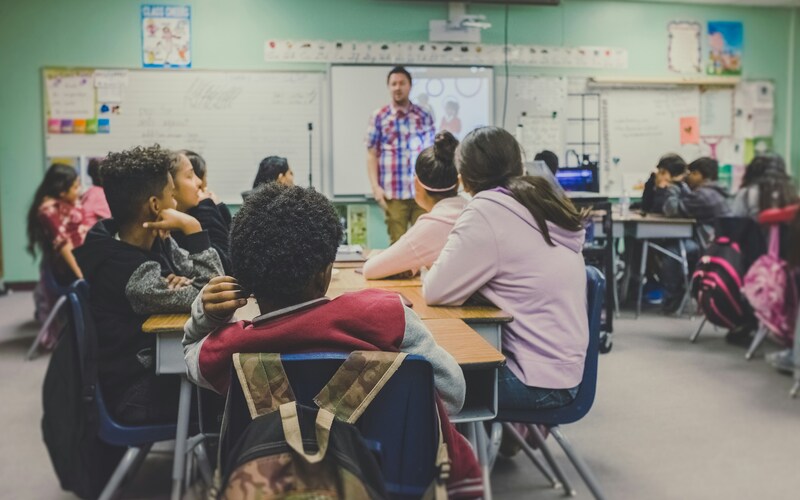
Multilingual classrooms have complex dynamics. Students with varying language abilities often struggle to understand the subject matter, especially if the language of instruction is not their mother tongue. For example, in international schools where English is the primary language, students from non-English-speaking countries often struggle to grasp complex academic concepts.
This problem impacts not only academic achievement but also student self-confidence. They can feel isolated and less likely to participate in class discussions. Teachers also face significant challenges in conveying material in a way that is understandable to all students without losing depth of meaning. This is where the role of education translation becomes crucial, helping to create equality in access to knowledge.
Read More: AI and General Translation in Malaysia: Friends or Foe?
2. The Role of Educational Translation in the Learning Process
Educational translation encompasses various aspects of education, from translating textbooks, learning modules, and exam instructions to communicating between schools and parents. In the context of multilingual classrooms, educational translation serves to ensure that all students fully understand the learning content.
Teachers can use translated materials to assist students who are not yet proficient in the primary language of instruction. For example, translating lesson notes, a glossary of key terms, or even subtitles for instructional videos can act as a bridge of understanding. This way, students don't simply memorize but truly understand the concepts being taught.
Furthermore, educational translation can also assist in educational assessment. When exam questions are accurately translated, students can demonstrate their true abilities without being hindered by language differences. This is crucial for maintaining fairness in academic evaluations.
3. Improving Access and Inclusivity
One of the main goals of educational translation is to create inclusivity. In a multilingual classroom, every student deserves an equal opportunity to learn. Educational translation helps eliminate language barriers that can create inequalities. For example, immigrant students who have recently moved to another country often fall behind in their studies due to difficulties understanding the language of instruction. Having materials translated into their native language makes the adaptation process faster and more effective. They can follow lessons without losing the essence of the learning.
Furthermore, educational translation is also crucial for communication between schools and parents. In many cases, parents do not speak the language of instruction used at the school. Translating documents such as learning outcomes reports, school policies, or important announcements helps them stay involved in their children's educational development.
4. Challenges in Implementing Education Translation
Despite its significant benefits, implementing education translation is not always easy. One of the main challenges is maintaining translation accuracy without losing its cultural and pedagogical context. Educational language often contains technical terms or abstract concepts that are difficult to translate directly.
Furthermore, differences in education systems across countries also affect how terms are understood. For example, the term "curriculum" in one country may have a different structure and philosophy in another. Therefore, educational translators must not only be proficient in the language but also understand the academic and cultural contexts of both countries.
Limited resources are also a barrier. Not all schools have professional translators or access to high-quality AI-based education translation technology. As a result, translations are often done manually by teachers or school staff without professional translation backgrounds, potentially leading to misinterpretations.
5. Technology and the Future of Education Translation
Technological advances are now providing solutions to these challenges. Many artificial intelligence (AI)-based education translation platforms can help teachers and educational institutions translate materials quickly and efficiently. For example, the use of machine translation tools like Google Translate or DeepL has become a popular tool. However, in the educational context, a more accurate and contextual system is needed. Therefore, various platforms specifically designed for academic and educational translation have emerged, such as LMS (Learning Management Systems) platforms equipped with multi-language support.
Education translation technology also facilitates cross-border collaboration in research and curriculum development. Researchers and educators from various parts of the world can now share knowledge without language barriers, thanks to increasingly sophisticated automatic translation systems.
However, while technology can help, the role of humans remains irreplaceable. Good educational translation requires contextual understanding and cultural sensitivity that machines cannot always achieve. Therefore, the combination of human translators and technology known as human-AI collaboration is the best model in education translation.
6. Long-Term Benefits for Education
The implementation of educational translation not only provides short-term benefits for students but also has a long-term positive impact on education globally. First, educational translation increases academic mobility. Students from various countries can study at foreign institutions without worrying about language barriers. They have easier access to international books, journals, and other learning resources.
Second, educational translation supports cultural exchange and global understanding. When students study with materials adapted in multiple languages, they not only gain knowledge but also understand the values of different cultures. This creates a more tolerant, open, and prepared young generation for the global workforce.
Third, educational translation also helps educational institutions enhance their international reputation. Schools and universities that provide multilingual education services tend to be more attractive to prospective international students.
7. Multilingual Education for Multilingual Students

Globalization has made the use of more than one language commonplace. Today, multilingualism in schools is increasingly important to create a more welcoming and comfortable environment for multilingual students of all ages. UNESCO defines multilingual education as the use of more than one language in the classroom. With this approach, schools can use at least three languages: the mother tongue, a regional or national language, and an international language. This approach aims to support multilingual students in learning effectively, especially those whose mother tongue differs from the language of instruction.
Multilingual education can also help reduce stigma against multilingual students. UNESCO also views this approach as an effort to foster diversity among students and preserve their mother tongues. In an era of globalization and increasing educational mobility, educational translation plays a vital role in multilingual classrooms. It is not only a communication tool, but also a bridge to achieving educational equality and inclusivity. Through appropriate and contextual educational translation, every student regardless of their language of origin can learn with the same understanding. With the support of technology and professional translators, the future of educational translation will continue to evolve, helping the world of education become more open, equitable, and linguistically diverse.
If you're an educational institution, teacher, or training institution looking to ensure inclusive learning in a multilingual environment, it's time to collaborate with Digital Trans Asia. We provide professional education translation services to translate learning materials, academic documents, and school communications with high accuracy and cultural sensitivity. With the support of our expert team and advanced translation technology, we help you create an equitable and effective learning experience for all students. Contact Digital Trans Asia today and make education without language barriers a reality.