
Why Do Danmei Translations Feel Softer Than Other Chinese Web Novels?
Readers who explore a wide range of Chinese web novels often notice a striking tonal difference when they turn to Danmei. Even when its stories unfold in settings filled with war, political intrigue, cultivation hierarchies, or moral collapse, the prose often feels quieter, gentler, and more emotionally restrained. This contrast becomes especially noticeable in Danmei translation, where English versions frequently read as tender, lyrical, and introspective.
This softness is not accidental, nor is it simply a stylistic preference of translators. It is the product of deep genre logic, linguistic structure, historical censorship, and reader-driven expectations. Together, these factors shape how Danmei is written, translated, and ultimately experienced by global audiences.
To understand why Danmei translation feels softer than other Chinese web novels, kindly continue reading to discover what it values at its core and how those values differ from other genres.
Danmei as a Genre: Emotional Intimacy Comes First
The most fundamental reason Danmei translation feels softer than other Chinese web novels lies in the genre’s narrative priorities. It is not simply defined by featuring romance between male leads. It is defined by how relationships are constructed, how conflict is framed, and what the story treats as meaningful growth.
Many Chinese web novels—particularly those in xianxia, wuxia, or urban fantasy—center on external power. Progress is measured through cultivation levels, rank, wealth, reputation, or dominance. Emotional development often exists to support these arcs rather than drive them.
Meanwhile, Danmei operates differently. Emotional intimacy is not a subplot. It is the spine of the narrative. The primary tension rarely revolves around who is stronger or who wins. Instead, it focuses on emotional distance, trust, restraint, loyalty, and psychological alignment.
As a result, affection in Danmei is often expressed through quiet, consistent acts of care, emotional restraint rather than dramatic confession, silence that carries meaning, and loyalty demonstrated through endurance.
Moreover, characters may experience betrayal, exile, war, or moral compromise, but the narrative lens remains inward-facing. Emotional growth, mutual recognition, and the ability to remain aligned under pressure are treated as central achievements.
After all, Danmei stories tend to cultivate a softer emotional atmosphere even when the plot itself is dark. When translated into English, Danmei translation naturally preserves and often amplifies this tenderness, especially when contrasted with other Chinese web novels that prioritize speed, spectacle, or power escalation.
Mandarin, Subtext, and Why Softness Translates Differently
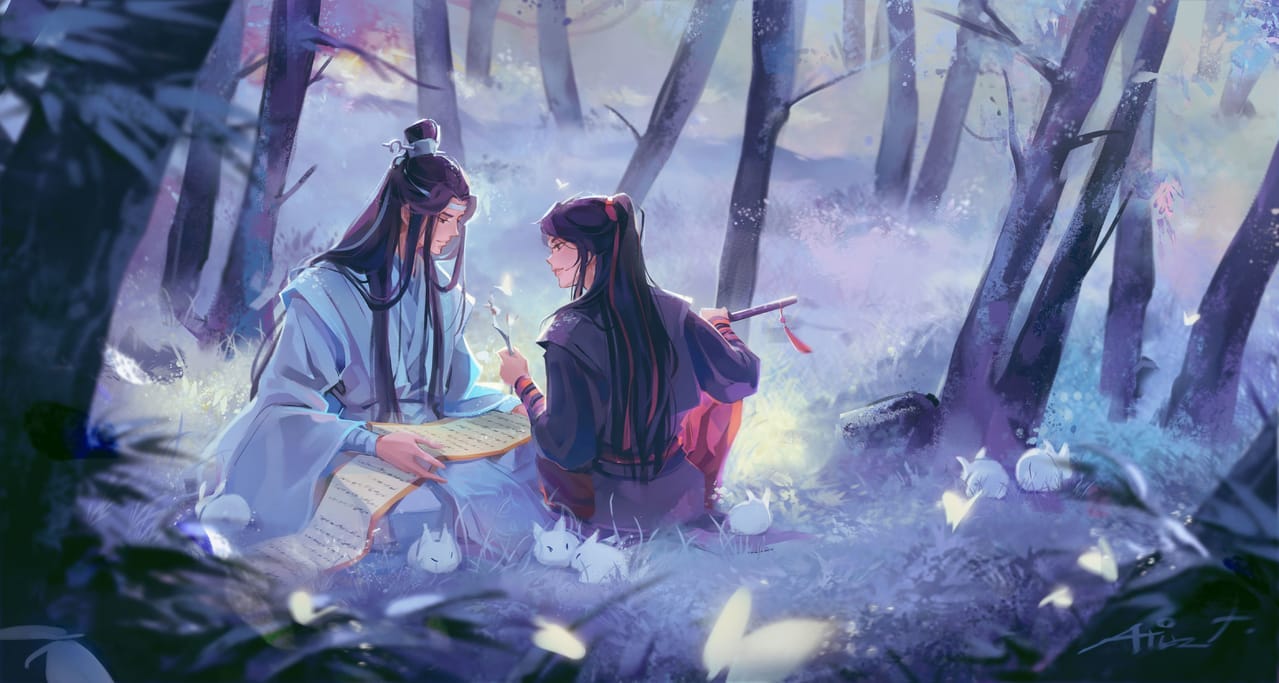
Another reason Danmei translation feels gentle lies in how Mandarin Chinese encodes emotion. Chinese prose often relies on implication rather than explicit emotional labeling. Small actions, such as offering a cloak, adjusting a sleeve, or standing watch through the night, can signal deep intimacy without verbal affirmation.
In Chinese, these moments feel natural and restrained. English essence, however, such minimalism can risk feeling emotionally flat if translated too literally. To preserve emotional resonance, translators often add gentle modifiers, choose softer verbs, and smooth dialogue for emotional continuity.
As a result, what was subtle in Chinese can feel poetic in English. This does not mean the translation is inaccurate. It means the translator is compensating for linguistic differences to preserve emotional intent.
Censorship and the Evolution of a Tender Narrative Voice
Censorship has played a crucial role in shaping Danmei’s softness. Restrictions on explicit queer romance within Chinese publishing environments forced its authors to develop indirect, emotionally sophisticated storytelling techniques.
Rather than portraying desire through physical intimacy, Danmei’s writers learned to encode romance through longing and emotional distance, silence and restraint, symbolic gestures of care, and waiting, devotion, and sacrifice. These constraints did not weaken the genre. They refined it.
Emotional intensity was redirected into atmosphere, psychology, and subtext. A character standing guard through the night, remembering another’s preferences, or enduring separation quietly can carry immense romantic weight without explicit description.
When these stories undergo Danmei translation, this restraint often becomes more visible. Translators must preserve nuance while navigating linguistic and cultural gaps. In doing so, they frequently lean into lyrical phrasing and emotional cohesion, reinforcing the genre’s gentle tone.
Additionally, compared to other Chinese web novels—where violence, ambition, or heterosexual romance may be depicted directly—Danmei’s restraint stands out as softness.
Translator Mediation: Emotional Fidelity Over Literal Force
Another important factor behind the softness of Danmei translation lies in the translator's philosophy. Many translators are deeply familiar with the genre, prioritize emotional fidelity over literal bluntness, and understand reader expectations for tonal consistency.
They often soften phrasing intentionally to avoid breaking emotional immersion. A blunt sentence in Chinese may be rendered with gentler English wording to preserve intimacy and character psychology. On the contrary, translations of action-heavy Chinese web novels often prioritize clarity, pace, and impact. The difference is not skill. It is intentional.
Examples From Well-Known Danmei Titles
The softness of Danmei translation becomes clearer when viewed through specific examples, as follows:
-
Mo Dao Zu Shi emphasizes emotional restraint, unresolved longing, and moral complexity. Much of the romance unfolds through memory, silence, and shared history rather than overt romance.
-
Heaven Official’s Blessing builds intimacy through endurance and devotion across centuries, often expressed through quiet acts rather than declarations.
-
Thousand Autumns juxtaposes philosophical debate and ideological conflict with subtle emotional shifts, allowing tenderness to exist beneath sharp dialogue.
In each case, the translated prose often feels gentle, even when characters are navigating violence, betrayal, or existential threat. This is not accidental. It reflects the genre’s emotional architecture.
Comparison With Other Chinese Web Novels
When placed alongside other Chinese web novels, Danmei’s softness becomes more apparent. This difference in emotional register is what makes its translation feel softer, not weaker.
-
Xianxia and wuxia prioritize hierarchy, power growth, and external victory
-
Urban fantasy often centers on competence, dominance, and efficiency
-
BG romance frequently relies on dramatic conflict and possessive dynamics
Danmei, by contrast, treats relationships as emotional ecosystems rather than battlegrounds. Power exists, but it is relational rather than hierarchical. Conflict is often internalized rather than explosive.
Softness Is Not the Absence of Intensity
It is essential to clarify that softness does not mean simplicity or lack of depth. Danmei frequently explores obsession, moral ambiguity, trauma and loss, identity fracture, and ethical compromise. In other words, the difference lies in expression. Instead of shouting, Danmei whispers. Instead of spectacle, it offers intimacy. What feels gentle in language often carries sharp psychological weight beneath the surface.
Conclusion
The softness of the Danmei translation is not an accident or a mistranslation. It is the result of genre priorities centered on emotional intimacy, Mandarin’s reliance on subtext, Censorship-driven narrative refinement, translator mediation, and reader expectations.
Compared to other Chinese web novels, Danmei operates in a distinct emotional register, one that values restraint, tenderness, and psychological depth over dominance and spectacle. For readers drawn to emotional nuance and quiet intensity, this softness is not a flaw. It is the genre’s defining strength.
Ready to enhance literary translation quality with expert localization? Visit https://digital-trans.asia/ to learn more about our services. Contact us today to get started!