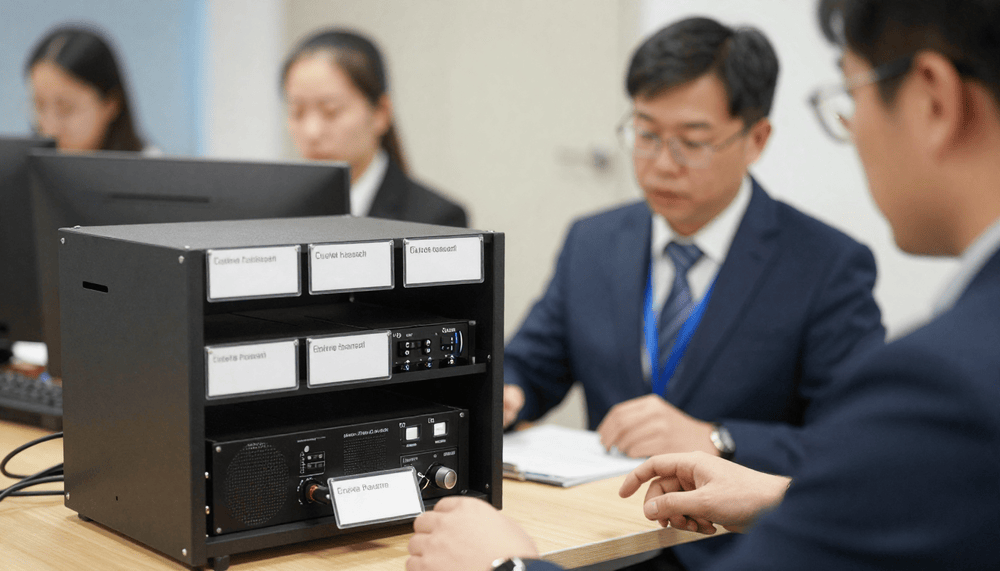
7 Real-World Interpreting Challenges and How Professional Interpreters Overcome Them
Real-world interpreting challenges relate to the linguistic, cognitive, and technical barriers interpreters encounter during effective verbal communication during live assignments.
Such challenges are a result of factors such as speed, cultural considerations, complexity of subjects, conditions of environment, and human cognitive limitations. Real world interpreting challenges are addressed by professional interpreters through structured preparation, specific techniques used in interpretation, ethics, and skill development.
Definition and Explanation of Real-World Interpreting Challenges

Challenges associated with real-world interpreting involve real-life situations that take place in real-time interpretation settings, which include business, law, medicine, diplomacy, and conferencing. Interpreting, as opposed to translation, requires on-the-spot processing, cultural adjustment, and reproduction, leaving no room for correction or alteration.
For example, in real-world interpreting challenges, interpreters must listen, process, and speak almost simultaneously. All three functions require a lot of cognitive skills, such as memory, attention, and linguistic skills. The situation is further complicated by such occurrences as technical terms, accents, emotive speakers, interruptions, and so forth.
Other significant aspects that help define a challenge in a real-life interpreting situation include unpredictability. When interpreting, a speaker can go off-script, talk too fast, change topics suddenly, and even use colloquialisms that may not be understood by a foreign audience. This makes interpreting one of the most challenging linguistic jobs in the world.
Benefits and Use Cases of Addressing Real-World Interpreting Challenges
Effectively managing real-world interpreting challenges delivers measurable value across industries and regions. When interpretation is handled professionally, communication becomes clearer, safer, and more reliable.
Key benefits include:
- Enhanced clarity in cross-border business negotiations and contract clarity
- Reduced risk of miscommunication in legal and medical settings
- Stronger trust between multinational stakeholders
- Smoother international conferences and live events
- Greater inclusivity for multilingual audiences
- Compliance with regulatory and legal language requirements
Real-world interpreting challenges commonly appear in use cases such as diplomatic meetings, arbitration hearings, multinational board meetings, factory audits, investor roadshows, and international training sessions. In these scenarios, accuracy directly influences strategic outcomes.
Professionals who understand real-world interpreting challenges help organizations avoid costly misunderstandings while ensuring that meaning is preserved across languages and cultures.
Also read: What Is Sworn Translation? Full Guide for Indonesian Users
How Professional Interpreters Handle Real-World Interpreting Challenges
Professional interpreters rely on systematic processes to manage real-world interpreting challenges effectively. Their approach combines preparation, technique, technology, and ethical discipline.
Step 1: Pre-Assignment Research and Terminology Preparation
Thorough preparation is the primary defense against interpreting obstacles. Professional interpreters study industry-specific terminology, speaker backgrounds, and event objectives before the assignment.
Preparation allows interpreters to anticipate complex vocabulary, acronyms, and concepts that may arise. This step significantly reduces errors during live delivery.
Step 2: Selecting the Appropriate Interpreting Mode
Different real-world interpreting challenges require different interpreting modes. These include simultaneous interpretation, consecutive interpretation, whisper interpretation, and remote interpretation.
Choosing the correct mode helps manage speech speed, audience size, and technical constraints. The wrong mode can amplify real-world interpreting challenges instead of minimizing them.
Step 3: Cognitive Load Management Techniques
Interpreters use advanced techniques such as cognitive chunking, anticipation, reformulation, and prioritization to handle real-world interpreting challenges. These methods help manage memory limitations and reduce mental fatigue.
Professional interpreters are trained to focus on meaning rather than word-for-word delivery, allowing them to maintain accuracy even under pressure.
Step 4: Team-Based Interpretation and Rotation
For long sessions, interpreters work in teams and rotate every 20 to 30 minutes. This practice is essential in managing real-world interpreting challenges related to fatigue, concentration loss, and error risk.
Team rotation ensures sustained quality and protects interpreter performance during high-stakes events.
Step 5: Ethical Standards and Neutrality
Maintaining neutrality is critical when addressing real-world interpreting challenges. Professional interpreters follow strict ethical codes that prohibit adding, omitting, or altering meaning intentionally.
Ethical discipline ensures that interpretation remains accurate, unbiased, and trustworthy in sensitive environments.
7 Real-World Interpreting Challenges and Professional Solutions
Below are the most common challenges encountered in real assignments and how trained interpreters manage them effectively.
1. Fast Speakers and Unscripted Speech
Rapid speech is one of the most common real-world interpreting challenges. Speakers often accelerate their pace during persuasive arguments, negotiations, or emotionally charged moments, leaving little processing time. Unscripted speech adds complexity, as ideas may shift abruptly or lack clear structure.
Professional interpreters manage this challenge by prioritizing meaning over sentence structure. Instead of attempting word-for-word delivery, they identify core messages, omit redundancies, and reorganize content into clear and logical output. Techniques such as strategic summarization and anticipation allow interpreters to preserve intent even when delivery speed is unpredictable.
2. Technical and Industry-Specific Language
Highly technical topics create significant real-world interpreting challenges, particularly in legal, medical, engineering, financial, and regulatory contexts. Specialized terminology, acronyms, and procedural language leave little room for approximation or guesswork.
Interpreters overcome this by conducting thorough pre-event research. This includes reviewing agendas, contracts, technical documents, and reference materials, as well as building terminology glossaries specific to the assignment. When necessary, professional interpreters consult experts or reference materials to ensure accuracy and consistency during live interpretation.
3. Accents and Regional Variations
Accents, dialects, and regional speech patterns intensify real-world interpreting challenges. Even within the same language, pronunciation, rhythm, and idiomatic usage can differ significantly depending on geographic or cultural background.
Professional interpreters develop long-term exposure through continuous practice and real-world experience with diverse speakers. This exposure trains auditory recognition skills and improves adaptability. In challenging cases, interpreters rely on contextual cues and subject familiarity to maintain comprehension despite unfamiliar pronunciation patterns.
4. Cultural Nuances and Idiomatic Expressions
Cultural references, humor, and idioms often lack direct equivalents, making them classic real-world interpreting challenges. Literal translation can distort meaning or cause confusion if the reference does not exist in the target culture.
Interpreters resolve this by conveying equivalent meaning rather than literal wording. The goal is to ensure that the target audience understands the intent, tone, and implication of the message. This mediation requires deep cultural intuition alongside linguistic fluency.
5. Emotional and High-Stress Environments
Courtrooms, medical emergencies, labor disputes, and crisis negotiations amplify real-world interpreting challenges due to heightened emotional intensity. Speakers may express fear, anger, or urgency, which can affect speech clarity and coherence.
Professional interpreters are trained to maintain composure and emotional distance while delivering accurate interpretation. They focus on clarity, neutrality, and completeness, ensuring the speaker's tone is accurately reflected without compromising professional neutrality. This emotional discipline is critical in high-stakes environments.
6. Technical Equipment and Audio Issues
Poor sound quality, equipment failure, or unstable connections create external real-world interpreting challenges that can disrupt communication instantly. Background noise, feedback, or signal interference can reduce comprehension for both interpreters and listeners.
Experienced interpreters collaborate closely with technical teams, test equipment in advance, and verify audio conditions before sessions begin. When disruptions occur, they apply contingency strategies such as adjusting listening positions, switching channels, or coordinating rapid technical fixes to minimize impact on communication flow.
7. Fatigue and Cognitive Overload
Mental fatigue is an unavoidable real-world interpreting challenge, especially during long meetings, conferences, or hearings. Continuous listening, processing, and speaking place heavy demands on memory, attention, and decision-making.
Professional interpreters manage fatigue through structured team rotation, scheduled breaks, hydration, and disciplined focus techniques. These practices help maintain accuracy and consistency throughout the assignment, ensuring that performance quality does not decline over time.
Also read: Is Non-Sworn Translation Reliable? Here’s What to Know
Common Mistakes and Risks in Handling Real-World Interpreting Challenges
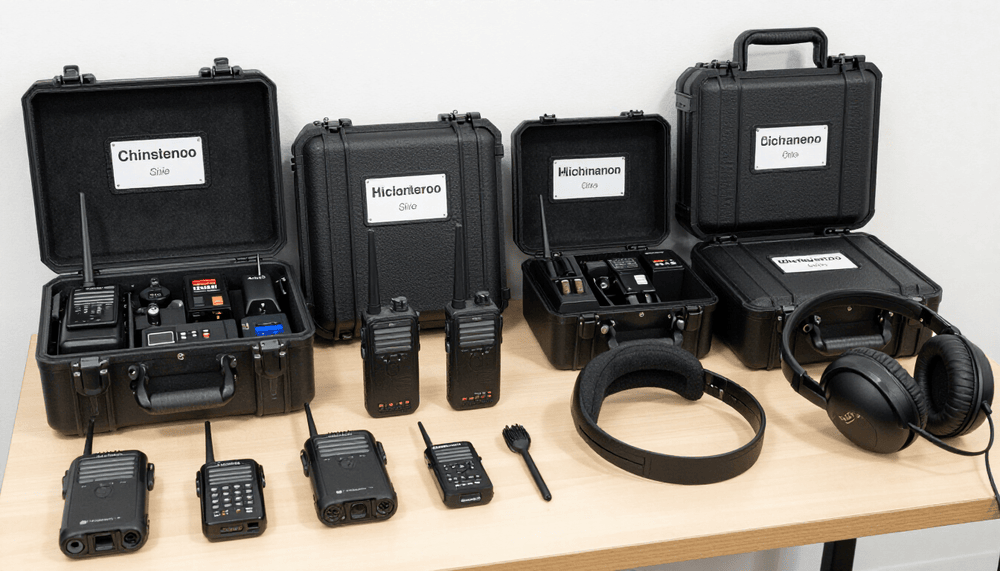
Mismanaging real-world interpreting challenges can lead to serious consequences. Common mistakes include insufficient preparation, underestimating session length, and assigning unqualified interpreters to complex assignments.
Another major risk is relying on bilingual staff instead of trained professionals. Linguistic fluency alone does not prepare an individual to manage real-world interpreting challenges under live conditions.
Failure to address these risks can result in misinterpretation, legal exposure, reputational damage, and operational setbacks.
Organizations facing complex multilingual interactions often underestimate the impact of real-world interpreting challenges on outcomes. Working with experienced interpreters who understand industry context, cultural nuance, and live communication dynamics mitigates risk and ensures communicative clarity.
This is especially critical for businesses operating across multiple Asian markets where linguistic and cultural variation is high.
FAQ About Real-World Interpreting Challenges
-
What makes real-world interpreting challenges different from translation challenges?
Interpreting requires spontaneous processing without revision, while translation allows time for editing and review. -
Can technology eliminate real-world interpreting challenges?
Technology supports interpreters but cannot fully replace human judgment, cultural understanding, and ethical decision-making required to manage real-world interpreting challenges. -
How do professional interpreters prepare for real-world interpreting challenges?
They prepare through terminology research, contextual analysis, rehearsal, and selecting the appropriate interpreting mode for each assignment.
Conclusion
Real-world interpreting challenges are an unavoidable part of live multilingual communication, but they are manageable with professional expertise, structured preparation, and ethical discipline. When interpreters are properly trained and supported, they enable accurate, reliable communication even in high-pressure environments.
Digital Trans Asia provides professional translation, interpretation, and localization services for businesses across Asia. If your organization operates across borders, industries, or languages, addressing real-world interpreting challenges early can protect decisions, relationships, and outcomes.
Contact us to discuss how professional interpretation can support your communication needs with accuracy and confidence.
Ready to overcome interpreting challenges with expert interpretation services? Visit https://digital-trans.asia/ to learn more about our services. Contact us today to get started!