In-House vs Outsourced Game Localization: What Works Best and When
In-house game localization and outsourced game localization are two primary approaches studios use to adapt games for international audiences. Both methods have different benefits depending on scale, rate of release, and budget. Understanding when each of these forms of localization functions will go a long way in reducing risks as well as improving quality, especially where there is a need for growth.
What Is the Internal and External Game Localization Model?
In-house game localization, also known as managing localization internally, involves handling the entire process with the studio’s own staff. The teams may include translators, localization producers, and other specialists. Outsourced game localization means working with external localization vendors or language service providers.
This involves accessing expertise, technology, and capacity across multiple languages and geographies, often alongside the development schedule. Both models are designed to deliver authentic and appropriate player experiences.
The distinction between the two models rests on their structures. This is a choice confronting game teams more and more as localization is defined as an operational requirement, as opposed to being just a post-production task. The choice isn’t about preference but about the reality of the business.
Also read: Subtitle Translation vs Localization: Key Differences
Benefits of Each Localization Approach
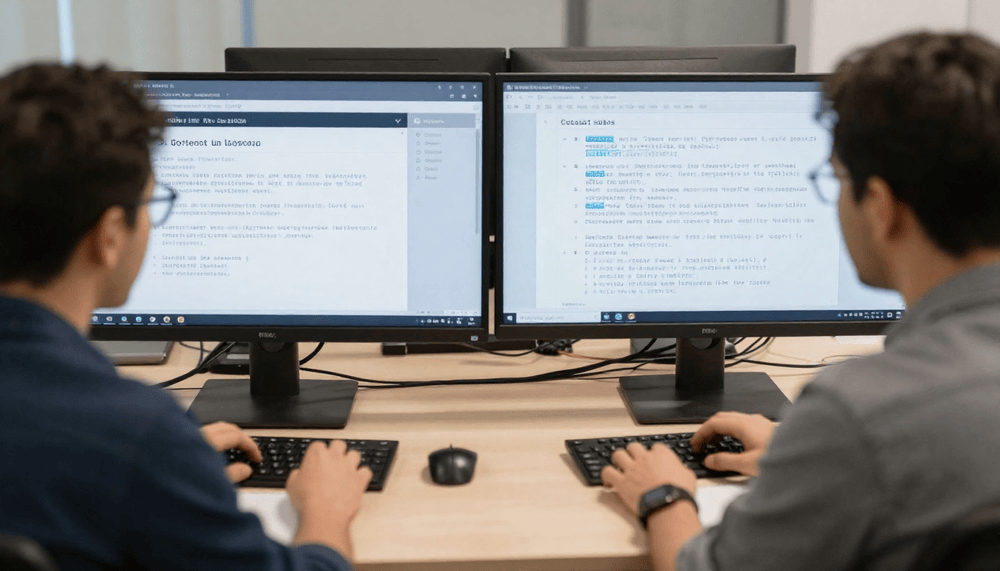
Choosing between in-house or outsourced game localization depends on project scope, language coverage, and long-term business goals.
Benefits of In-House Game Localization
- Deep product knowledge and direct access to developers and designers
- Greater control over tone, terminology, and creative decisions
- Faster internal feedback loops for iterative development
- Strong alignment with ongoing live operations and narrative updates
- Better fit for studios with a limited number of target languages
In-house game localization often works well for large publishers with continuous release cycles or games with highly specialized lore and terminology.
Benefits of Outsourced Game Localization
- Immediate access to multilingual talent across regions
- Scalability for large language sets and simultaneous launches
- Established quality assurance and localization testing workflows
- Cost efficiency for studios without permanent localization staff
- Exposure to regional cultural expertise and market trends
Outsourced game localization is commonly used by indie studios, mid-sized developers, and publishers entering new markets for the first time.
How In-House and Outsourced Game Localization Work
The operational workflow differs significantly between in-house game localization and outsourced game localization, even when the end goals are similar.
How In-House Game Localization Operates
- Localization planning is integrated into early development stages
- Internal teams extract text assets directly from source builds
- Translators work closely with writers, designers, and engineers
- Localization testing happens alongside internal QA cycles
- Updates and live content are localized continuously
This model emphasizes tight integration and long-term ownership but requires sustained investment in staffing and tools.
How Outsourced Game Localization Operates
- The studio prepares text assets and reference materials
- A localization partner assigns native linguists and reviewers
- Translation and adaptation are handled externally
- Linguistic QA and functional testing are performed by the vendor
- Localized assets are returned for integration and final testing
Outsourced game localization relies on clear documentation, structured handoffs, and defined quality metrics to succeed.
A Practical Note on Hybrid Localization Models
Many studios adopt hybrid models that combine in-house and outsourced game localization. Core languages or narrative elements may be handled internally, while additional markets or overflow work are managed externally.
This approach allows teams to balance control with scalability, especially during major launches or seasonal content updates.
At this stage, many development teams begin evaluating external partners to complement internal capacity. A well-structured collaboration can reduce production pressure without sacrificing consistency, particularly when expanding into new Asian markets with distinct linguistic and cultural requirements.
Also read: 8 Subtitle Localization Tips for Seamless Video Adaptation
Common Mistakes in In-House and Outsourced Game Localization
Both in-house game localization and outsourced game localization present risks when misaligned with project needs.
Risks of In-House Game Localization
- High fixed costs for staffing and training
- Difficulty scaling quickly for new language additions
- Limited exposure to regional linguistic nuances
- Burnout during peak release periods
Studios often underestimate the operational load required to maintain quality across multiple updates.
Risks of Outsourced Game Localization
- Inconsistent tone if references and glossaries are incomplete
- Delays caused by unclear communication or late asset delivery
- Quality variation across vendors or language pairs
- Reduced creative context without sufficient collaboration
According to the International Game Developers Association, insufficient localization planning is a common cause of launch delays and regional performance gaps. These issues are rarely caused by the model itself, but by mismatched expectations and poor process alignment.
When In-House Game Localization Works Best
In-house game localization is typically most effective when:
- The game relies heavily on narrative depth and evolving lore
- Only a small number of languages are targeted
- Localization is tightly linked to live content updates
- The studio has long-term plans for global operations
- Budget allows for sustained localization staffing
Large publishers and studios operating games as long-term services often favor this model.
When Outsourced Game Localization Works Best
Outsourced game localization is often the better choice when:
- Launching in many regions simultaneously
- Entering unfamiliar linguistic or cultural markets
- Operating with limited internal localization expertise
- Managing one-time or seasonal releases
- Needing rapid scale without long-term overhead
For many developers, outsourced game localization provides flexibility and speed that would be difficult to replicate internally.
Evaluating Cost, Quality, and Time Trade-Offs
The decision between in-house game localization and outsourced game localization is rarely about cost alone. Total value should be assessed across:
- Time to market
- Localization quality and player comprehension
- Internal workload and opportunity cost
- Long-term scalability
Short-term savings from internal handling can be offset by slower expansion or quality risks. Conversely, outsourcing without clear standards can result in costly rework later.
Also read:The Power of Storytelling: Video Game Industry vs Movie Industry
FAQ
What is the main difference between in-house game localization and outsourced game localization?
In-house game localization is handled by internal staff, while outsourced game localization is managed by external vendors or partners.
Is outsourced game localization suitable for indie developers?
Yes. Outsourced game localization is often the most practical option for indie studios due to scalability and lower upfront costs.
Can studios switch between in-house and outsourced game localization?
Yes. Many studios transition to or adopt hybrid models as their localization needs evolve.
Which model offers better quality control?
In-house game localization offers more direct control, but outsourced game localization can match quality with strong processes and clear references.
Does outsourced game localization slow down development?
Not inherently. Delays usually result from unclear asset preparation or communication gaps, not the outsourcing model itself.
Is in-house game localization more expensive?
It can be, due to fixed staffing and tooling costs, especially for studios with fluctuating localization demands.
Can both models support live-service games?
Yes. Many live-service games use hybrid approaches to balance speed, consistency, and scale.
Conclusion
There is no universal answer to whether in-house game localization or outsourced game localization works best. The optimal approach depends on project scope, internal capacity, target markets, and growth strategy. Studios that evaluate localization as a long-term operational function rather than a one-off task are better positioned to make sustainable decisions.
If you are evaluating how in-house game localization or outsourced game localization fits your roadmap, reaching out to a regional partner can help clarify options, timelines, and risk factors before your next release.
Ready to scale your global game success with expert game localization services? Visit https://digital-trans.asia/ to learn more about our services. Contact us today to get started!